kiaa: (Default)
[personal profile] kiaa


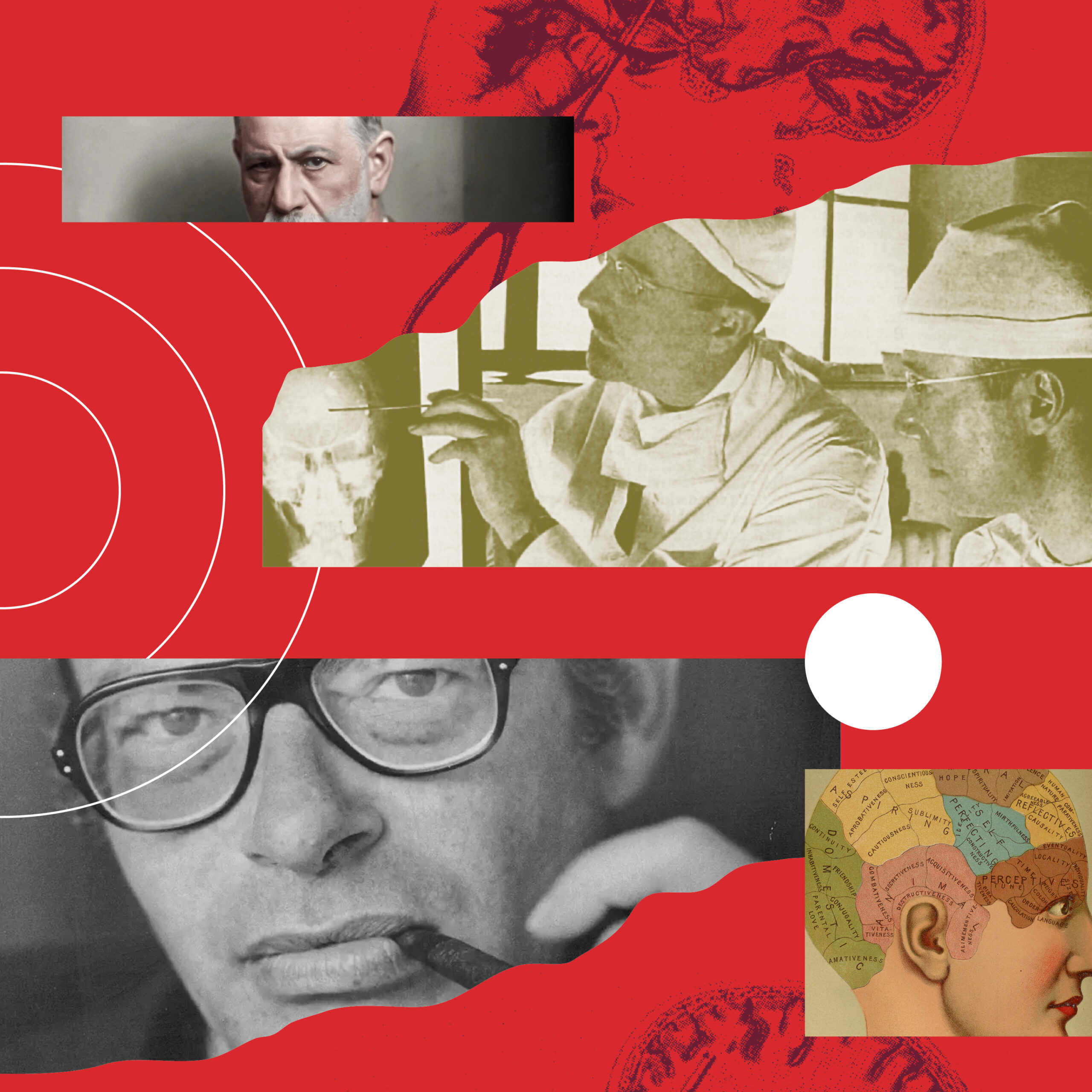
In 1973, psychologist David Rosenhan tested whether psychiatrists could reliably distinguish sanity from mental illness. 8 mentally healthy volunteers presented at 12 US psychiatric hospitals, each reporting a single symptom—hearing vague voices. All were admitted and diagnosed, often with schizophrenia.

Once hospitalized, the volunteers behaved normally. Despite this, staff interpreted ordinary actions as symptoms of illness. Other patients quickly recognized the volunteers were not ill, but medical professionals did not. No one was released as sane, everyone who was discharged went out with a "schizophrenia, in remission" diagnosis.

When a hospital later claimed it could detect impostors, Rosenhan warned that fake patients would arrive. The hospital identified 41 supposed fakes. Rosenhan had sent none.

The study did not suggest patients fabricate illness, it demonstrated how institutional labels can override objective judgment and obscure the person beneath the diagnosis.

Food for thought.
luzribeiro: (Default)
[personal profile] luzribeiro

Let's keep this simple.

First thing he wants: To secure the Arctic against Russian encroachment.
What is the sane way to get it: Work with Europe and Denmark on cooperation, strengthen NATO presence, and invest jointly in security and infrastructure in Greenland.
Knowing this is Trump, what is likelier to happen: He damages relations with Europe, bullies allies, and treats Greenland like a real estate deal. Even if US leverage in the Arctic increases short term, the long term damage to trust and alliances helps Russia more than it hurts it.

Next thing he wants: Greenland’s resources (rare earths, minerals, future energy, and shipping routes).
What is the sane way to get it: Long term investment, partnerships with Greenlandic authorities, respect for environmental limits, and shared economic benefits.
What is likelier to happen: Crude pressure on Denmark, zero regard for local consent, and a resource grab mentality that fuels backlash and pushes Greenland and Europe away from the US. Again, Russia (and China) wins long-term.

Next thing he wants: A Nobel Peace Prize.
Well, he's not getting it.
Why he will not get it: You do not win a peace prize by antagonizing allies, undermining institutions, and treating diplomacy as a personal transaction. Even real deals get discounted when they are paired with chaos and threats. And no, he hasn't stopped 8+ wars.

Anything else he wants:
Control of Arctic shipping lanes, keeping China out of the region, and a domestic political win he can sell as “strong leadership” (that last bit might sell to the dumb MAGA crowd, mind you). Greenland is useful to him less as a place, and more as a symbol of power and dominance.

And I won't even begin on the stupidity of the "one boat arrives 500 years ago" pseudo-argument. That's just beyond idiotic.
asthfghl: (Слушам и не вярвам на очите си!)
[personal profile] asthfghl

I know you don't care that much about this corner, and why would you, and yet... Here's a unique case:

Bulgaria's President Radev resigns amid speculation he will form his own party

Bulgaria right now feels like it's in a never-ending political loop. After massive protests over corruption and a government forced to resign just before the holidays, party leaders have failed to form a stable cabinet, and we're staring down our 8th national election in just 5 years. Figures like Boyko Borisov and oligarch-linked powerbrokers such as Delyan Peevski still dominate headlines and public ire, and trust in institutions is at an all-time low.

Enter president Radev*, who has positioned himself against that morass. He's been vocal about fighting corruption, pushing back against the old party networks that seem to keep re-emerging. On foreign policy he's been a bit of a mixed bag, but he's not shy about opposing military aid to Ukraine, and he's repeatedly critiqued both internal corruption and external pressure from oligarchic interests. While he's shown some skepticism about things like the Euro (he insisted on a referendum before adopting it earlier this year, which was never granted), his broader rhetoric has been about democratization. However he's generally seen as mildly pro-Russia, and Euro-skeptic.

What's really extraordinary here, and this is point no one else has to wink at to understand, is that this is basically unprecedented anywhere: a sitting president resigning mid-term with the apparent goal of forming his own party and running in an early parliamentary election. No major comparative example comes close to this exact combination of moves (I've checked extensively). Leaders leave office to run for other positions sometimes, but not like this, not with this much direct political momentum and not when the presidency had been smack in the centre of national debates.

Looking forward, I think Bulgaria is at a tipping point right now. The (now former) president said it himself: this is the first point in recent history when Bulgarians have stopped wanting to just flee to greener pastures, now they prefer to stay and push back against the powers that be instead. So if Radev's new party manages to cause a major shake-up and break the old clientelistic game, it could finally give voters a real alternative and maybe force a stable, reform-oriented majority. On the other hand, the familiar networks could absorb or repel this challenge, dragging us back into fragmentation. Personally, as someone who wants a strong Bulgaria within Europe, anti-corruption reforms, a pro-EU, pro-Euro trajectory and clear support for Ukraine, I see this as a moment where either we could turn a corner or fritter this rare opportunity away. The next few months are going to be incredibly decisive.

* the president has the same surname as myself, LOL! I swear we're not related!
kiaa: (Default)
[personal profile] kiaa

In case you missed the headlines (or your car texted you the alert), German regulators have effectively forced Toyota's premium Lexus brand to turn off the remote pre-heating feature on hundreds of thousands of combustion-engine vehicles sold in Germany so you can no longer cozy up a frozen car at the tap of an app before you've even found your gloves. The official line is refreshingly undramatic: lawmakers consider unattended idling "avoidable pollution", so Toyota flipped a software switch to keep owners out of trouble, while all-electric and plug-in models still get their toasty interiors:
https://www.aa.com.tr/en/economy/germany-forces-lexus-to-remotely-turn-off-car-warm-up-function-over-environmental-impact-report/3801107

Meanwhile, in the "send this to your cousin who thinks AI writes secret laws" corner of the internet, some outlets are gleefully proclaiming that Germany has declared remote start a crime against humanity and that "Big Brother" is yanking buttons right out of your dashboard:
https://autos.yahoo.com/policy-and-environment/articles/germany-forces-lexus-remotely-kill-173212814.html

That sort of sensational spin makes great water-cooler outrage but only serves to remind us that the real world often has perfectly rational explanations - even if it's colder waiting for your windshield to defrost.
kiaa: (Default)
[personal profile] kiaa

Apparently, the internet has decided that on 12 August 2026 the Earth will politely switch off gravity for 7 seconds. Just long enough, we are told, for everything to float, panic, and then crash back down again. The story comes with all the usual extras: a secret government project, tens of billions of hidden dollars, and authorities who "know the truth" but refuse to tell us. Because of course they do:

LINK: The Economic Times

The funny part is not just the claim itself, but how confidently it's being presented. Gravity doesn't "pause" like a streaming video, and no serious physics allows for a planet-wide gravity outage on a timer. If it did, we wouldn't be debating it on social media - we'd be rewriting every physics textbook ever written. Still, the theory survives because it sounds dramatic, scientific enough to fool non-experts, and suspicious enough to fit the classic "they're hiding something" narrative. And of course there's ample numbers of idiots to feed the drama. Or just trolls who'd like some shits'n'giggles.

What actually is happening on that date is far less exciting but much more real: a total solar eclipse. A rare, beautiful, well-understood astronomical event that has been predicted for decades using boring things like math and observation. Somehow, "the Moon blocks the Sun for a few minutes" just doesn't compete online with "gravity collapses and the oceans try to escape".
The money angle also collapses under basic scrutiny. The idea that there's a secret $89 billion operation hidden inside a publicly scrutinized space budget is almost impressive in its optimism. Governments struggle to hide minor accounting mistakes, but sure - a civilization-altering gravity experiment slipped through unnoticed. Totally plausible.

In the end, stories like this say less about science and more about us. Conspiracy theories offer simple explanations, secret villains, and the comforting feeling that you're part of the few who "get it". Reality, meanwhile, is messier, slower, and much less cinematic. Gravity will still be there on 12 August 2026. The real question is why so many people would rather believe otherwise.
asthfghl: (You may kiss me now!)
[personal profile] asthfghl
When Russia invaded Ukraine, the promise was simple: repeat history, march west, and win like the Soviet Union once did. Years later, only one part of that promise came true: the marching. The quick, decisive victory never happened. What was supposed to last days has turned into a grinding war that has already lasted longer than the Soviet fight against Nazi Germany.

The result is hard to ignore. After years of fighting, Russia controls only limited territory at an enormous cost in lives, resources, and internal stability. Entire regions inside Russia now feel the consequences directly, with power outages, infrastructure damage, and a growing sense that the war is not something happening "far away".

At the same time, the international position Moscow spent two decades building is unraveling. One by one, Russia's so-called "partners" are falling away, and the Kremlin appears unable (or unwilling) to do much about it. In the Middle East, a key ally collapsed, leaving Russia sidelined. In Latin America, another partner was neutralized by the US without any visible Russian response. Even Russian commercial interests are now being directly challenged, again without retaliation.

The uncomfortable truth is... )
asthfghl: (Default)
[personal profile] asthfghl
New year, new luck, yo! And of course, again for the purposes of the DailyQuotes list, here's the list of funny/silly/thoughtful/whatev's quotes for 2026. As usual, a line has a chance of finding its place here if it inspires others to either have a giggle, or go into deep contemplation (keep hoping, lol). A link to this list will also be displayed on the community sidebar:

"The NATO charter clearly says that any attack on a NATO member shall be treated, by all members, as an attack against all. So that means that, if we attack Greenland, we'll be obligated to go to war against ... ourselves! Gee, that's scary. You really don't want to go to war with the United States. They're insane!"
(edelsont)
luzribeiro: (Ormie love)
[personal profile] luzribeiro
Where Men & Women Are Most & Least Likely To be Friends In The Middle East
Blue = More Likely; Red = Less Likely
What's the deal with the few blue areas?


SOURCE

nairiporter: (Default)
[personal profile] nairiporter
Recent talk about the United States asserting control over Greenland, whether framed as acquisition, pressure, or "strategic necessity", should be taken seriously not for its feasibility, but for what it signals. Greenland is not a vacant asset, it is an autonomous territory within the Kingdom of Denmark, a NATO ally. Treating it as a bargaining chip implicitly weakens the principle that borders and sovereignty among allies are not subject to unilateral revision.

From a NATO perspective, this kind of rhetoric introduces strategic ambiguity where cohesion is essential. NATO's strength depends less on raw military capacity than on mutual trust and predictability. If a leading member appears willing to coerce or sideline another ally over territory, it complicates alliance decision-making and gives adversaries an opportunity to test fractures, particularly in the Arctic, where Russia and China are already probing for influence.

More broadly, this episode reflects a tension between transactional power politics and the rules-based order the US has historically championed. Even if intended as leverage or domestic signaling, normalising the idea that great powers can "reallocate" strategic geography undermines the norms the West relies on to criticise similar behaviour elsewhere. The long-term cost is not Greenland itself, but the erosion of credibility when the same standards are no longer consistently applied.
mahnmut: (The Swallows have won!)
[personal profile] mahnmut
You must have all heard the news. Today the US executed a direct military operation against Venezuela, striking key targets, capturing president Maduro and his wife, and announcing their transfer to the US to face criminal charges, including alleged narco-terrorism and drug trafficking offenses. The rapidly unfolding events mark the most significant US military intervention in Latin America since Panama in 1989. The US government has framed this action as a response to alleged criminality and illegitimacy, but global reactions underline deep concerns about violations of sovereignty and international law. Overwhelming condemnation has come from the UN, China, Russia, and numerous Latin American governments, with calls for respect for the UN Charter and regional stability:
https://www.gmanetwork.com/news/topstories/world/971543/trump-says-venezuela-s-maduro-deposed-captured-after-us-strikes/story/

To understand these developments, it is useful to recall John Perkins's Economic Hit Man framework, which posits that US foreign policy often disguises economic and geopolitical objectives - access to resources, debt leverage, and strategic realignment - as benevolent interventions. Perkins describes a range of methods: economic pressure via loans and conditional aid, covert manipulation of political elites, engineered crises to justify external influence, and, in extreme cases, overt regime change. Whether or not one accepts every detail in Perkins narrative, its core thesis - that the US systematically prioritizes its corporate and strategic interests, often at the expense of local sovereignty - provides a lens through which to view the US behavior across decades.

Read more... )
abomvubuso: (...I COULD MURDER A CURRY.)
[personal profile] abomvubuso
Happy and prosperous new year to everyone! May it be way better than the one we've just sent away. Now, time to see what monthly topic you guys have chosen for the first month of the new year:

Political Utopias: The Best Ideas That Never Worked


And here's the poll for February!

What should be the next monthly topic?

1) The Return of Power Politics
2) Weaponizing the Economy
3) The Crisis of Expertise
4) The Politics of Decline
5) If History Had Twitter

Feel free to suggest more...
airiefairie: (Default)
[personal profile] airiefairie
The tennis world is once again abuzz after an exhibition match in which Nick Kyrgios defeated Aryna Sabalenka 6–3, 6–3 in the latest version of the Battle of the Sexes. Social media quickly filled with comments claiming that Kyrgios would "run over" any woman on court and that biology is a wall that cannot be overcome. But anyone who believes these matches are meant to prove that women are physically stronger than men is completely missing the point.

To understand why this debate is so painful, one must look far back in history. At the first modern Olympic Games in 1896, women were not allowed to compete at all. The founder, Pierre de Coubertin, believed their participation would be "impractical and unaesthetic". Women were not fighting for medals, but for the basic right to set foot in the stadium.

Read more... )

In the end, the debate is not about whether a man can beat a woman or vice versa. It is about honesty and dignity at a time when business and profit are not the only guiding forces. The Battle of the Sexes is a reminder that every athlete deserves recognition for their work within their own category, without being diminished because of their biological traits.
airiefairie: (Default)
[personal profile] airiefairie
A favourite ending of a favourite story - just in time for Christmas.


oportet: (Default)
[personal profile] oportet
Election season has begun, maybe election season never ends.

The Republican primary likely won't be exciting - if Trump backs Vance or Rubio or both, they'll have no serious challenge.

The Democrat field is wide open - Gavin Newsom is the clear frontrunner now, but when has the clear frontrunner this far out held on to it? History says it's best to be off the radar at this point.

What do Democrats want? The list is long but you know the basics - someone pro-choice, anti-gun, environmentally friendly, lgbtq friendly, etc. Most importantly, they want someone who can win it all.

Who can win it all? Maybe it would help to take a look at the last 3 to do it.

Bill Clinton - former governor. 'Southern' guy appeal to traditionally red areas. (Arkansas, 6 EVs).

Barack Obama - African american senator - with a focus on Healthcare. (Illinois, 19 EVs)

Joe Biden - former Senator. Friends with (and owes nomination victory to) James Clyburn. (Pennsylvania, 19 EVs)

Mix all that together and we're looking for a 'Southern' African american senator, with a focus on Healthcare, who is friends with James Clyburn, from a state with around 15 EVs. How about someone without any ties to scandals or ridiculous statements, someone who is interview-friendly, someone who does not like Trump but also has not centered their entire political identity around that? A seemingly true believer of the Democrat partys basic platform who is currently 'off the radar'.

What if this person existed?

What if they were .6 cents to the dollar to win the Democrat party nomination - behind LeBron James, behind Liz Cheney, even with Hunter Biden?

I would personally prefer Democrats nominate(appoint) a terrible candidate again, I would rather that hypothetical 165/1 stay put - but as your financial advisor/life coach I would advise you to put at least a 20 on it.
nairiporter: (Default)
[personal profile] nairiporter


The map above shows roughly who controlled what parts of Africa in 1880.
This is just 5 years before the Berlin Conference in 1885 that would launch the so-called “Scramble for Africa,” of full European domination and conquest of the continent.

However, as you can clearly see in the map above European colonisation was already well underway at this point.
(Source)
airiefairie: (Default)
[personal profile] airiefairie
Recent proposals by the US administration to tighten entry requirements should concern anyone who cares about civil liberties and personal privacy. Under the new rules, visitors seeking short-term entry would be required to disclose years of social media activity, contact details, and information about family members. This represents a significant expansion of state surveillance, with little clarity on how the data would be collected or used.

The stated aim is national security, but such measures risk becoming arbitrary and authoritarian. Decisions about who constitutes the “wrong kind” of visitor could easily extend beyond genuine security threats to lawful expression and political opinion. Many people have publicly expressed views that those in power might dislike; that alone should never be grounds for scrutiny or exclusion.

Moreover, the policy is unlikely to achieve its stated goal. Most violent crime in the US is committed by its own citizens, not foreign visitors. These proposals appear impractical, intrusive, and counterproductive, potentially deterring travel without making anyone safer. If safety is truly the priority, attention would be better directed at domestic issues that pose far greater and well-documented risks.
luzribeiro: (Dog)
[personal profile] luzribeiro
What do east coast people call each other?


Read more... )
fridi: (Default)
[personal profile] fridi
For centuries the West has held outsized global power, even though Western societies were always a demographic minority. That dominance is now slipping, and although the world is still built on Western foundations (established institutions, science, law, finance) the West can no longer assume it sets the terms for everyone else. The real question is what kind of Western dominance is fading, and what might replace it.

After 1945 the USA forged a politically unified West, but then diluted that cohesion by framing itself as leader of the entire Free World, defined mostly by what it opposed. This logic survived the Cold War and eventually turned into a universalist liberal project that depended on having enemies to justify itself. When liberal democracy failed to spread globally (and when the US electorate doubled down on America First) the gap between Western ambitions and Western capabilities became impossible to ignore.

The West now faces three paths.

Read more... )
mahnmut: (Wall-E loves yee!)
[personal profile] mahnmut
Much on the subject, eh? Examples of tasks given to AI gone awry abound, I'm sure you've realized by now. Well, for instance this article collects a series of AI-generated images where image-generation tools misinterpret prompts so wildly that the results are just... surreal.

Way to go, AI?


SEE MOAR )
fridi: (Default)
[personal profile] fridi
Although this month's topic is The AI Arms Race, I'd like to use one of the suggested topics for next month and go ahead of schedule a bit, and post on that topic now: Democracy in the Algorithm Age

In today's digitally saturated world, elections no longer hinge solely on speeches, rallies, or television ads. They increasingly depend on data. The turning point came with the 2008 campaign of Barack Obama, when his team embraced Web 2.0 tools: social networks, email, online video, to reach voters directly. More than half of adult Americans used the Internet in the 2008 election, and many became politically active online: donors, volunteers, and grassroots mobilizers.
LINK / LINK

But Obama’s team did more than broadcast broadly: they built detailed voter profiles, using public records and behavioral data to segment the electorate into fine-grained groups: young voters, minorities, new voters, even niche social networks never before used by major campaigns. By doing so, they could tailor communications, fundraise online, and create a sense of community among supporters. This data-driven approach didn't just expand reach, it changed the relationship between citizen and campaign, arguably revitalizing democratic participation for many previously disengaged voters.
PDF / PDF

Read more... )

Credits & Style Info

Talk Politics.

A place to discuss politics without egomaniacal mods

DAILY QUOTE:
"The NATO charter clearly says that any attack on a NATO member shall be treated, by all members, as an attack against all. So that means that, if we attack Greenland, we'll be obligated to go to war against ... ourselves! Gee, that's scary. You really don't want to go to war with the United States. They're insane!"

January 2026

M T W T F S S
    12 34
5 678 91011
12 13 1415 161718
19 202122 232425
262728293031