abomvubuso: (Groovy Kol)
[personal profile] abomvubuso
This could become a rather awkward problem for Trump and the Republicans before the November midterms. Fuel prices in the US have gone through the roof. Diesel has now passed $6 a gallon, with the increase being driven by the Iran war, disruption to global supplies and Ukrainian attacks on Russian oil infrastructure (Zelenskyy has ignored Donnie's demand to stop bombing Russian refineries, LOL).

And there is a slightly ironic detail here: people in Republican congressional districts drive considerably more than people in Democratic ones. Brookings estimates that the average constituent of a Republican House member drives about 26% more miles than the average constituent of a Democratic member. So expensive fuel is hitting precisely the voters Republicans depend heavily on.

Read more... )
mahnmut: (ROFL MAO!)
[personal profile] mahnmut
What if Chuck Norris joined the Fellowship of the Ring?
From the Mines of Moria to the final battle for Middle-earth, Chuck steps into the most iconic moments of The Lord of the Rings and changes everything. Balrogs, Uruk-hai, Nazgûl… suddenly Sauron has a much bigger problem


asthfghl: (Слушам и не вярвам на очите си!)
[personal profile] asthfghl
First, I'll start with this. Shocking:

PISA Scores by Country 2026:
https://worldpopulationreview.com/country-rankings/pisa-scores-by-country

Last night I watched the discussion on BNT about whether social media should be completely banned for children and teenagers. It was interesting because, almost at the same time, the latest PISA results were released - and the two subjects seem increasingly difficult to separate.

The data from PISA is pretty depressing. Across the OECD, average performance in reading and mathematics has fallen to its lowest level ever recorded. Reading has fallen by 28 points since 2015, roughly equivalent to a year and a half of learning, while maths has fallen by 22 points. One in five 15-year-olds is now a low performer in all three core subjects: reading, mathematics and science.

But for me, the most interesting part isn't the maths. It's reading. PISA found a growing number of what it calls "hasty readers": students who go through a text quickly but give incorrect answers. Their proportion has increased substantially since 2018. The decline is particularly worrying because the reading skills that are deteriorating are not simply about understanding a sentence. They include evaluating information, making connections between different sources and thinking critically about what we are reading - exactly the skills that should matter most in an age of unlimited information and AI.

Read more... )
mahnmut: (ROFL MAO!)
[personal profile] mahnmut
Trump has discovered a revolutionary new economic theory: democracy with cashback.

Vote Republican, get $5,000.
Vote Democrat, get... probably inflation.

A few things he could perhaps add to the shopping list: $2,000 tariff cheques, much lower grocery and petrol prices, inflation that was going to disappear almost overnight, cheaper prescription drugs, and the famous “tariffs will pay for it” magic trick. So far, the cheques are still imaginary, the prices haven't received the memo, and apparently the only thing paying dividends is the promise itself.

I’m just wondering what happens if the Big Orange Baboonhead raises the offer to $10,000 before election day. At that point, the midterms basically become a Black Friday sale ;-)

Oh, and while we're at it, I suggest that he uses these to pay this Democracy Dividend:


kiaa: (Default)
[personal profile] kiaa
When we talk about the politics of AI, the conversation usually goes straight to deepfakes, elections and whether a chatbot will persuade us to vote for the wrong candidate. Those are real concerns, but I think we are looking at the problem too narrowly.

The bigger political question is becoming: who controls AI? This is no longer some distant question for science-fiction writers. A handful of enormous technology companies are developing systems that increasingly influence what information people see, how businesses operate, how governments work and, potentially, how wars are fought. Meanwhile, elected governments are struggling to work out what rules should apply to technology that's changing faster than legislation can keep up.

Read more... )
luzribeiro: (Hat)
[personal profile] luzribeiro

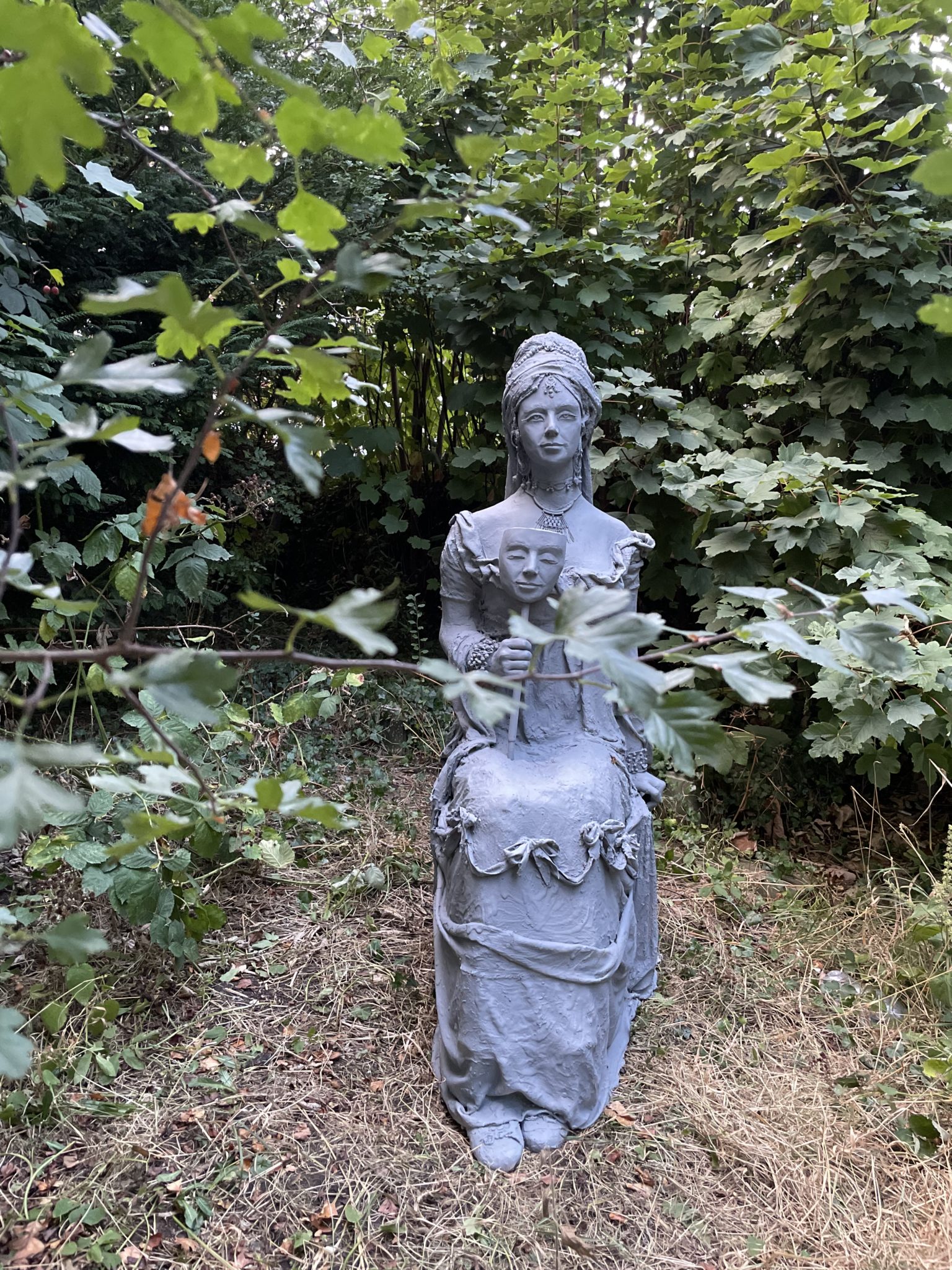
On April 3, 1817, a strangely dressed young woman appeared near Almondsbury, Gloucestershire. She spoke an incomprehensible language that no one could understand. Eventually taken into the household of local magistrate Samuel Worrall, she attracted the fascination of his wife, Elizabeth.

Then a Portuguese sailor, Manuel Eynesso, supposedly translated her story: she was Princess Caraboo, a noblewoman from a distant island called Javasu, kidnapped by pirates and escaped by jumping overboard near England. It was a perfect Regency-era romance, and Britain fell for it.

Read more... )
abomvubuso: (...I COULD MURDER A CURRY.)
[personal profile] abomvubuso
Hey everyone! Here's the monthly topic that you guys chose at the last poll:

The Politics of Artificial Intelligence


And here's the poll for October

What should be the next monthly topic?

1) The Age of Political Strongmen
2) The New Battle for Europe
3) The Politics of Population Decline
4) The War for the Global Narrative
5) Politicians We'd Least Like to Be Stuck in a Lift With

Feel free to suggest more...
nairiporter: (Default)
[personal profile] nairiporter
Imagine building civilisation again from the beginning. New laws, new cities, and a world untouched by human history. Which mistake from Earth should we leave behind forever?

I mean, you're navigating a generational spaceship that finally reaches a habitable planet. Time to start over. How would you approach this differently, knowing what's been done so far on Earth?


abomvubuso: (Groovy Kol)
[personal profile] abomvubuso
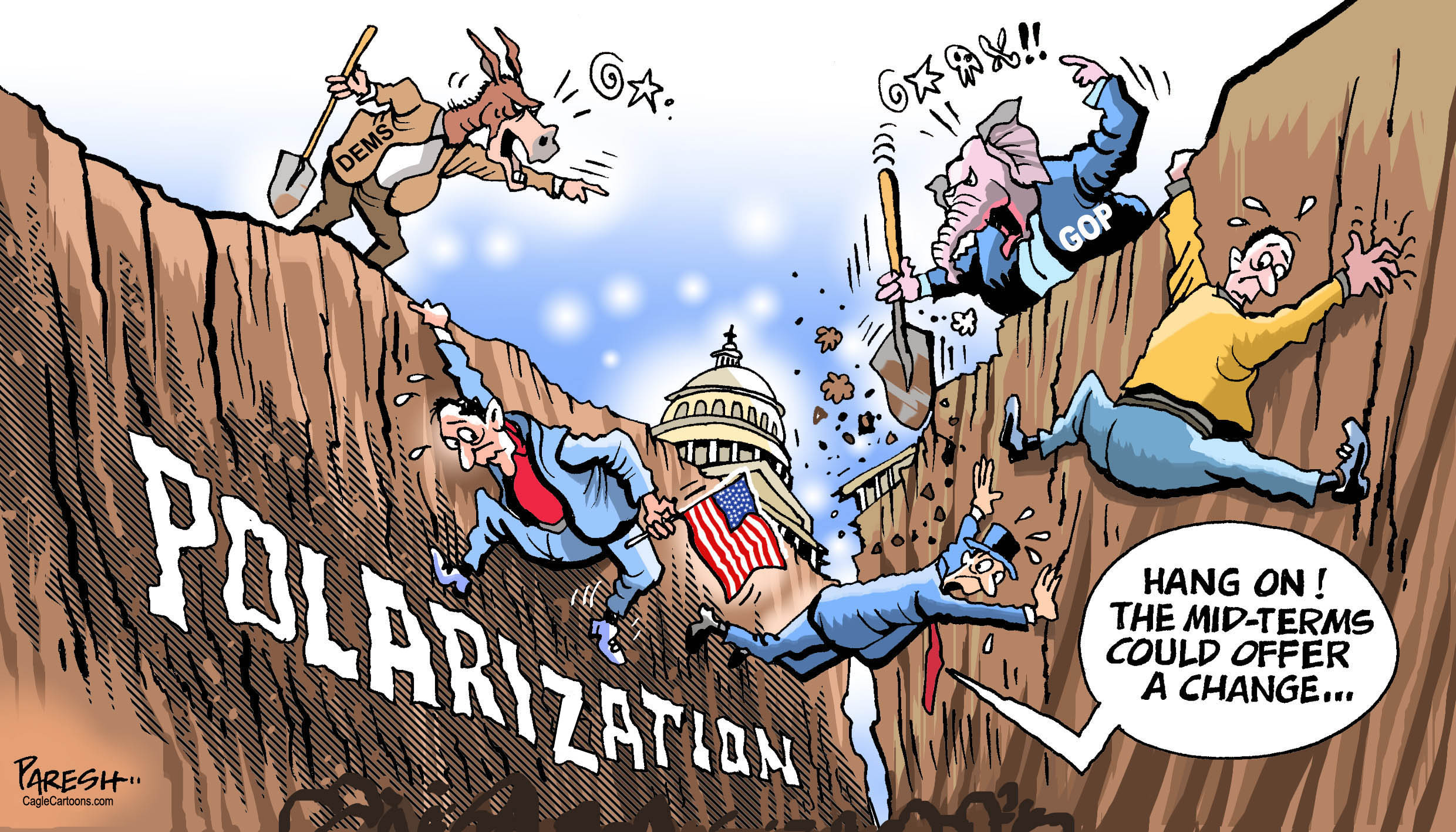
Straight to the topic, if I may. See, I don't think political polarisation is necessarily a bad thing. Political pluralism and all that, obviously. Sure, democracy is supposed to involve arguments. People are supposed to disagree about taxes, immigration, the economy, Europe, foreign policy, climate change and pretty much everything else. If everyone agrees with everyone, we don't really need elections. Or we get elections like those in Belarus or North Korea.

The REAL problem starts when politics stops being about what we believe and becomes about who we hate.

And you might have noticed that this seems to be happening in more and more countries. In the US for example, politics has become so tribal that for many people the question is no longer "Is my side doing the right thing?" but "How can I stop the other side?" Europe isn't immune either. Across Europe we've seen the rise of parties whose support is built partly on opposition to the political establishment, while the traditional parties increasingly define themselves by who they're fighting against.

Read more... )
nairiporter: (Default)
[personal profile] nairiporter


How does a culture reshape familiar stories to reflect its own values and worldview? Well, the Russian (or rather, Soviet) version of The Lord of the Rings, titled The Last Ringbearer, reimagines Mordor as a misunderstood industrial power. Tolkien’s tale becomes biased history told by the victors, challenging the moral simplicity of the original.

Mordor is portrayed as a center of science and progress, threatening the magical elites of the West. Rational innovation clashes with feudal stagnation, turning the story into a battle of ideas rather than good versus evil.
Gandalf and the Elves are recast as colonial aggressors, waging war to suppress Mordor’s rise. Their campaign is driven by fear of change, not moral righteousness.

This retelling reflects Russian skepticism of Western narratives and embraces moral ambiguity. It questions historical authority and asks who decides what’s “good” or “evil.”

The Last Ringbearer has a niche but passionate following. Some praise its depth; others critique its heavy-handedness. Still, it remains a bold cultural reinterpretation of a beloved classic.

More on Wiki.
fridi: (Default)
[personal profile] fridi


34 candidates are standing in the Clacton by-election.

Among them: Nigel Farage, several actual political candidates, and Count Binface.

At this point I'm not sure whether Clacton is having a by-election or auditioning for the next series of The Thick of It.

Anyway, good luck to all 34. May the least ridiculous candidate win.

LINK
luzribeiro: (Default)
[personal profile] luzribeiro
I have a feeling Trump may have picked the wrong opponent this time. The man whose administration spent $5.1 million of public money restoring and covering 4 enormous statues near the Lincoln Memorial in 23-carat gold leaf. The man who already has a 5-metre gold statue of himself at his Florida golf resort. The man whose name now adorns an international airport. That man has apparently decided that the world still hasn't properly appreciated the commercial value of the Trump brand.

So he is suing the BBC for at least $10 billion.

The dispute goes back to a 2024 Panorama documentary about Trump:
https://www.theguardian.com/us-news/2026/jul/21/trump-financial-details-bbc-lawsuit

Read more... )
airiefairie: (Default)
[personal profile] airiefairie
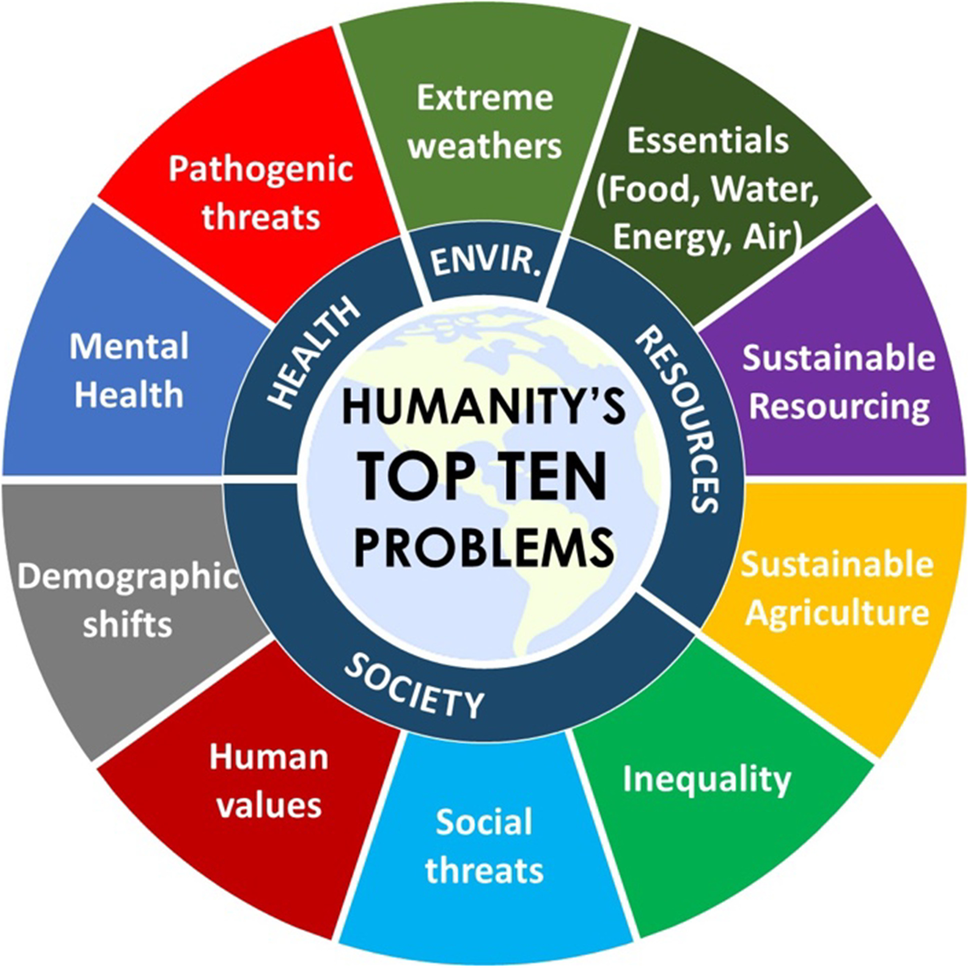
Every generation faces challenges, but one threat could shape humanity's future more than any other.
So what do you think is humanity's greatest threat?
There are no right or wrong answers... just share your opinion and explain why. Let's see what the majority thinks!

I'll start first:
Humanity itself, climate change, and overpopulation are the first things that come to mind as major threats, due to the role of human nature, greed, and selfishness. Generally speaking.

mahnmut: (Default)
[personal profile] mahnmut
People often say: "If you've done nothing wrong, you've got nothing to worry about". Sounds sensible enough... right up until "doing something wrong" starts including attending a protest, handing someone a leaflet, being in the same Whatsapp group, or simply hanging around with people the government doesn't like.

What caught my attention about Trump's NSPM-7 isn't that it creates some dramatic new law. It doesn't. According to the article, it takes powers the government already has and redirects them towards political activists, allowing prosecutors to cast a much wider net. The emphasis shifts away from proving what an individual actually did and towards who they know, what groups they associate with, and what political views they hold.

Read more... )
abomvubuso: (...I COULD MURDER A CURRY.)
[personal profile] abomvubuso
Sooo, time to see what you guys have chosen for the monthly topic for August:

Can Democracy Survive Polarisation?


And here's the poll for September:

What should be the next monthly topic?

1) The End of the Rules-Based International Order?
2) The Geopolitics of Water
3) The Politics of Artificial Intelligence
4) Can the West Stay United?
5) If History's Dictators Had PR Teams

Feel free to suggest more...
kiaa: (3d)
[personal profile] kiaa

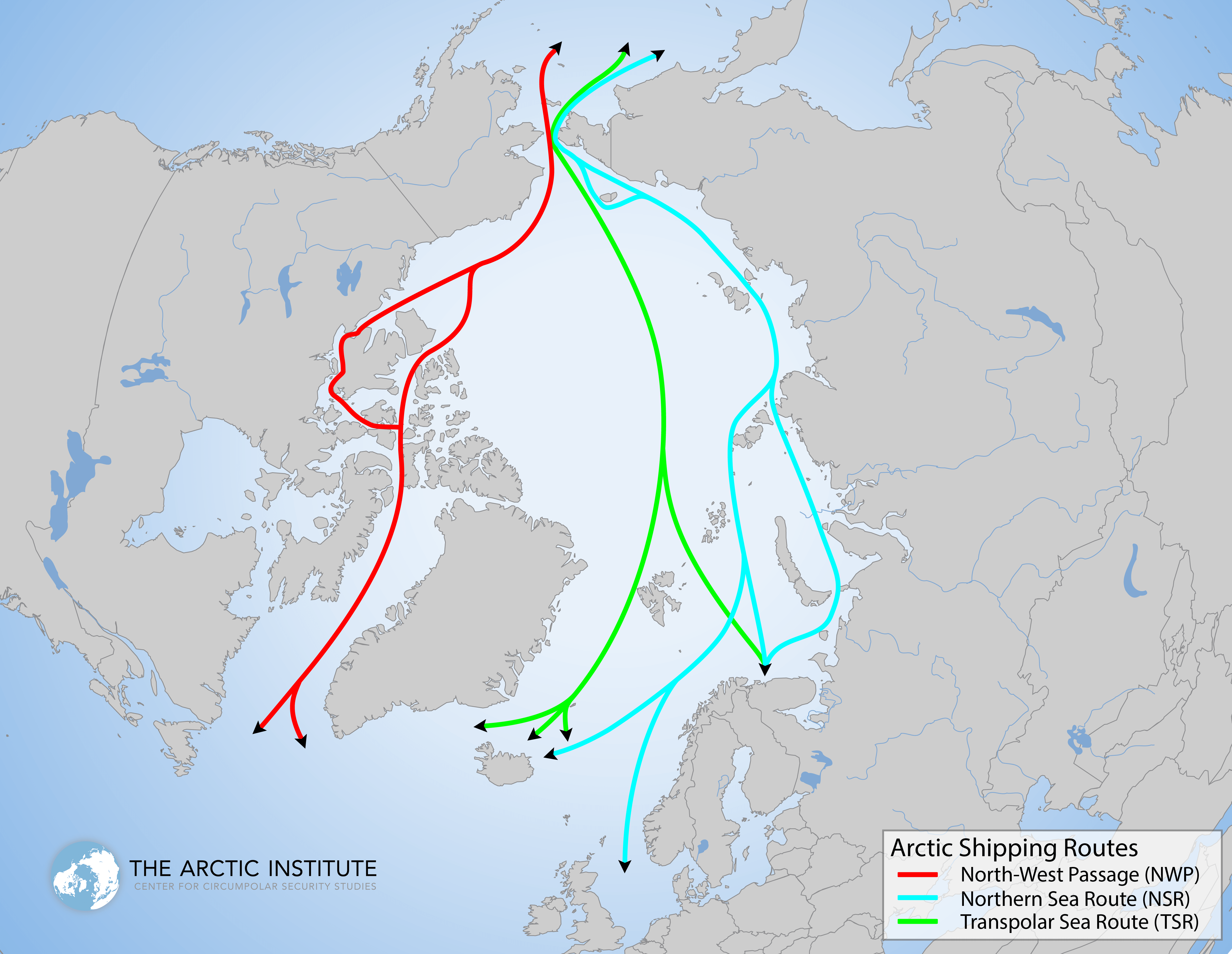
For centuries, the Arctic was one of the least explored and most mysterious regions on Earth, appearing on maps as a blank space filled with uncertainty. Here be dragons, you know. Well, today it's one of the most carefully studied areas of the planet, with maps showing everything from shipping routes and sea ice changes to natural resources and national boundaries. These maps offer a fascinating visual journey through how our understanding of the Arctic has changed and why this frozen region has become so important in the modern world.

More fascinating Arctic maps here: https://www.thearcticinstitute.org/arctic-maps/
kiaa: (3d)
[personal profile] kiaa

It's one of history's great "what if" questions. If Hannibal had conquered Rome and Carthage had won the Punic Wars, the world today would almost certainly look very different.

The biggest change is that there probably wouldn't have been a Roman Empire. Without it, Latin would never have become the dominant language of Western Europe, so French, Spanish, Portuguese, Italian and Romanian might never have existed in their current form. Europe would likely have remained a patchwork of Celtic, Greek, Germanic and other local cultures.

Christianity would also have developed very differently. It spread rapidly thanks to the Roman Empire's roads, administration and common languages, and later became the empire's official religion. Without Rome, it might have remained a much smaller regional faith for centuries, and the Catholic Church as we know it might never have emerged.

It's also worth remembering that a Carthaginian victory wouldn't necessarily have meant a "Carthaginian version of the Roman Empire". Carthage was primarily a commercial maritime power focused on trade rather than territorial conquest. It may have dominated Mediterranean commerce without ever creating the kind of unified empire Rome built.

In short, a Carthaginian victory probably wouldn't have created a Carthaginian world, it would have prevented a Roman one. Many of the institutions, languages, legal systems and cultural traditions that underpin modern Western civilization might never have developed in the form we know today.
mahnmut: (Albert thinks ur funny.)
[personal profile] mahnmut
Yeah. That Anatoly. The elite powerlifter who goes around gyms pretending to be a cleaner, then doing pranks on gym goers by casually lifting huge weights... "Sorry, must clean here".

My fave part: that 32kg mop.

nairiporter: (Default)
[personal profile] nairiporter
Whenever Ebola breaks out in Africa, the virus itself is only part of the problem. The outbreak in eastern Congo is a perfect example of how disease, misinformation, conflict, and culture can combine into a nightmare.

The current outbreak is caused by the rare Bundibugyo strain, for which there is still no approved vaccine or treatment. Scientists have now started clinical trials of two promising therapies, but it could take months before anyone knows whether they actually work.

Meanwhile, the virus continues to spread in a region plagued by armed rebel groups, strikes at treatment centres, and widespread distrust of healthcare workers. Many locals genuinely believe Ebola is a spiritual curse, witchcraft, or even something invented by outsiders. Instead of going to hospital when symptoms appear, they often turn to traditional healers, shrines, or religious leaders. By the time many of them finally seek medical help, it's already too late.

Traditional burial rituals make things even worse. Since Ebola spreads through contact with bodily fluids, washing and preparing the bodies of the deceased can infect entire families. Yet many communities resist restrictions because they see these rituals as essential for the dead to reach the afterlife.

The lesson here is that epidemics aren't defeated by medicine alone. You also need public trust, education, functioning healthcare, and enough security for medical teams to actually do their job. Without those, even the best doctors and the most promising new treatments face an uphill battle.

That's probably the biggest takeaway from this outbreak: viruses may be biological, but the factors that determine how far they spread are often social, cultural, and political.
airiefairie: (Default)
[personal profile] airiefairie
The Arctic used to be something most of us only associated with polar bears, ice and scientific expeditions. Today it's becoming one of the hottest geopolitical flashpoints on the planet. As the ice melts, new shipping routes are opening up and huge deposits of oil, gas and rare earth minerals are becoming more accessible. Suddenly everyone wants a bigger piece of the Far North.

Russia has been investing heavily in its Arctic military presence for years, China calls itself a "near-Arctic state" despite being nowhere near it, and the US has once again put Greenland firmly on the strategic map. Even if some of Trump's statements sound outrageous, they reflect a reality that Washington sees the Arctic as far too important to leave to its rivals. This isn't just about maps anymore, it's about security, trade routes and access to resources.

The worrying part is that climate change is creating this opportunity in the first place. The same melting ice that should concern us environmentally is becoming an invitation for geopolitical competition. Instead of treating the Arctic as one of the world's last truly fragile regions, the major powers increasingly see it as the next economic frontier.

I suspect this "new scramble for the Arctic" is only getting started. Over the next decade we'll probably hear far more about icebreakers, naval patrols, Greenland, rare earths and Arctic shipping than we ever imagined. The Far North is no longer a remote corner of the world. It's becoming one of the places where the balance of global power will be shaped.

Case in point:
Greenland is not for sale, prime minister says after Trump demand

Credits & Style Info

 
Monthly topic:
The Politics of Artificial Intelligence

Dailyquote:
"I suspect that climate change will rapidly cause people to forget that the Arctic is still a very dangerous place that will kill you if it can."

September 2026

M T W T F S S
  123 456
789 10 111213
1415 1617 181920
2122 2324252627
282930