![[personal profile]](https://www.dreamwidth.org/img/silk/identity/user.png) fridi posting in
fridi posting in ![[community profile]](https://www.dreamwidth.org/img/silk/identity/community.png) talkpolitics
talkpolitics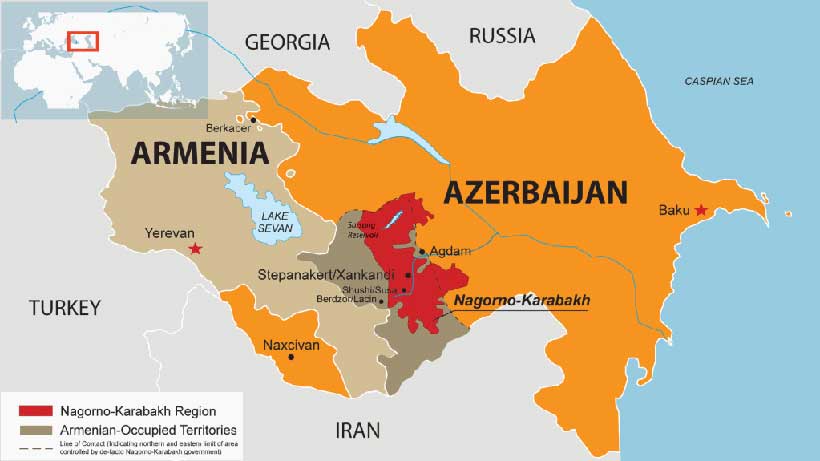
Artsakh, that's the Armenian name for Nagorno-Karabakh. Here I'm going to outline just a few main points, from a Turkish and from an Armenian point of view, about the renewed conflict there.
The Turkish standpoint is that Azerbaijan is important in several ways:
1) The TANAP pipeline, very significant for both Turkey itself and South-East Europe.
2) The tendency of a constantly increasing share of the Azeri natural gas in the Turkish energy mix (Azerbaijan even turned out to be Turkey's number one gas supplier earlier this year, even if just for a while).
3) Azerbaijan is an increasingly important user of the Turkish military-industrial complex (and I'm not just talking about their joint military exercises, but also Turkey's desire to build a military base in Naxcivan).
4) Azerbaijan is Turkey's gate to the Turkic-speaking Azeris in Iran and further alongside the Caspian Sea.
5) Azerbaijan is where two geopolitical corridors meet, the Armenia/Iran and Armenia/Russia knot.
Let me note here that the decrease of Russian gas supplies to Turkey that's been noticed since 2018, is mostly due to the influx of Azeri gas and American LNG. Also, Baku's ever increasing defense budget has made Turkey an ever bigger factor at the expense of Russia.
The Turkish rhetoric about Azerbaijan also has two levels. The official line is "one people, two states". The unofficial one refers to the Azeris as "our Shia brethren". I'm saying this just for context about the shared perception that exists between those two peoples more on a personal, grassroots level, rather than official, state level. At least that's how most Turks see Azerbaijan.
Let's face it, despite their recent hugs and hand-shakes, Turkey and Russia see each other as geopolitical rivals in post-Soviet Caucasus. The difference about Artsakh is, Russia doesn't see the resolution of the conflict as an essential issue (just to remind that Stalin initially assigned the entire Karabakh as an Azeri territory, but then he took a pencil, made a few scratches on the map, and drew a twisted and convoluted Nagorno-Karabakh border so he could create an Armenian-dominated province within Azerbaijan; that's how sneaky he was).
Indeed, Russia's priorities are more utilitarian; namely:
1) They don't want to allow an Azeri scenario for Armenia (ie gradual emancipation from Moscow's influence, especially in terms of defense and the economy). Russia has already had its positions in Georgia undermined, if the same happens in Armenia it would be bad for them.
2) Russia wants to keep its influence on Armenia, which is exactly why the latter is in such strained relations with all its neighbours.
3) Russia wants to retain the ability to activate a front in Turkey's backyard if need be (if we assume Greece is the front yard and the Kurds are the, well, basement), which would distract Turkey and scatter their resources and efforts.
In the meantime, we should also note that Russia has not been so hasty to jump to Yerevan's defense, certainly not the way Turkey has done for Baku. Moscow's reasons are primarily two:
1) A more general reason: Russia does want to keep supporting and influencing Armenia, but without further angering and alienating Azerbaijan.
2) A more specific reason: The Armenian government of Nikol Pashinyan has been more critical of the Russian regime than most Armenian leaders tend to be. He even had a famous line where he described the relations between Russia and Armenia as those of "a talker and a listener". Any delay and ambiguity in Russia's support for Armenia in this situation of escalation is likely motivated by a desire to weaken Pashinyan's position, so he could be pressed to play by Moscow's tune if he were to ensure the safety of his country in a situation as volatile as this.
In a nutshell, this is another theater in the grand chess game, and each player has their own style and reasons of playing it. But let's not confuse Turkey's assertiveness for a sign of true dominance, and Russia's apparent coyness for weakness. The chessboard is still up for grabs, and the end result of the game still hangs in the balance.


(no subject)
Date: 23/10/20 07:20 (UTC)Israel has also developed close ties with Azerbaijan and sells them military equipment.
France is a natural supporter of Armenia.
Etc etc.