The big parley
19/12/12 23:08![[identity profile]](https://www.dreamwidth.org/img/silk/identity/openid.png) airiefairie.livejournal.com posting in
airiefairie.livejournal.com posting in ![[community profile]](https://www.dreamwidth.org/img/silk/identity/community.png) talkpolitics
talkpoliticsBefore overwhelming the US east coast, the biggest Atlantic storm for 2012 swept through parts of the Caribbean where it killed almost 80 people, destroyed local infrastructure and demolished thousands of homes. In the north-eastern US states, Sandy was downgraded from a hurricane to a super-storm status, but even so it claimed 100 lives, ruined many settlements along the coast in New York and New Jersey state, leaving tens of thousands of people homeless; it blocked public transport for days (the water almost reached the ceiling in some NY subway stations), it paralysed the fuel supplies, and cut the electricity of over 8 million households, causing damages estimated at $ 60 billion (that is what Obama requested from Congress to deal with the consequences of the disaster). And it was only thanks to quick and adequate evacuation measures that the number of casualties was relatively limited.
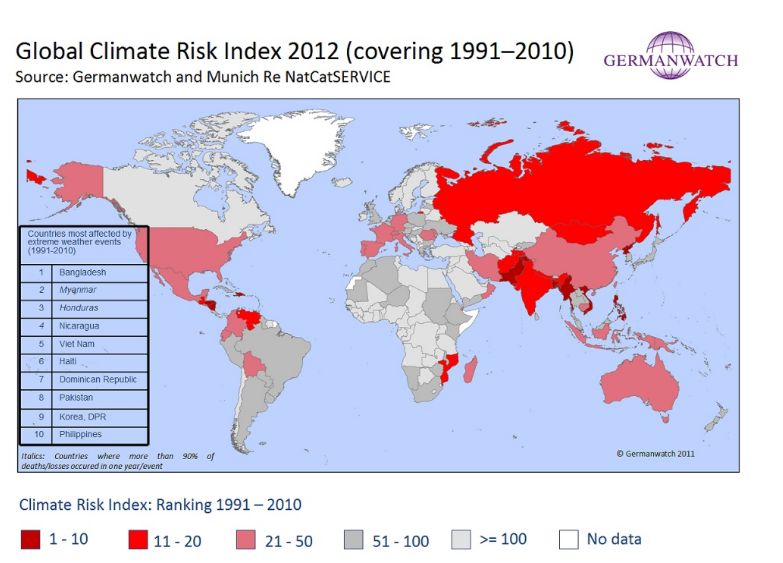
If anything, Sandy has reminded the wealthiest and most advanced countries that they are not immune to the extreme whims of nature any more than any other corners of the world. And the bad news is that more and more forecasts about the coming years are predicting these disasters to become more frequent and more severe.

"Sandy was a wake-up call for all of us", said UN Secretary General Ban Ki Moon when he met environment ministers and experts from 190+ countries in Qatar at the beginning of the month. The forum was meant to combine the 18th conference of the UN Framework Convention on Climate Change and the 8th summit of the members of the Kyoto protocol, whose term was expected to expire at the end of the year. In his address to the delegates, Ban Ki Moon warned that the record fast melting of the Arctic and Greenland ice, the super-storms, the severe droughts that have wreaked havoc in agriculture across many regions of the world, and the alarmingly fast rise of ocean levels, are heralds of a serious global crisis.
"The abnormal has become the new norm", he said. Indeed, climate anomalies are to be observed everywhere - from America to India, from Ukraine to Brazil, from South-East Asia to Africa. And indeed, no one is immune to climate change, be they rich or poor. This problem is becoming the biggest challenge to our civilisation, to our modern way of life and to any plans about the future.
Climate-related natural disasters have cost the world $ 366 billion last year, the EU commissary on humanitarian aid and disaster response, Kristalina Georgieva has announced. She cited a 2011 report that was made by 220 scientists from 60 countries which predicts that in the future the world will be suffering from extreme heat, drought, floods and storms more than any time in recorded history. Our world is changing fast, and we are becoming more vulnerable, she concluded just at the start of the Qatar meeting.
Using this occasion, a number of prestigious institutions and scientific teams announced the results of alarming observations resulting from their research. The common conclusion is that if the world keeps doing things like it has done until now, the time when it will have average temperatures higher by 4 degrees compared to pre-industrial-revolution times, is not far ahead. And that's double the acceptable limit that was set in 2010 for avoiding irreversible climate changes.
A World Bank report pictures a scenario resembling a doomsday movie, including food crises, water shortages (especially in East Africa, the Middle East and South Asia), with unpredictable political and social consequences. Eventually we would see entire settlements being wiped out, coastal regions depopulated due to the rising sea levels, an expansion of deserts, more frequent and more severe droughts, a rise in child mortality in sub-Saharan Africa, and a new peak in an array of contagious diseases. And, as could be expected, the poorest (and most vulnerable) countries would be most affected. Climate change could turn into "the biggest threat to biodiversity ever", the WB concludes.
This forecast also matches the report of an international research team commissioned by the Berkeley University in California. It predicts that the population growth, mass extinction of natural ecosystems and the climate changes are pushing Earth to an irreversible change of its entire biosphere, i.e. a "tipping point" which, in just a few generations, will catastrophically affect all life-supporting systems of society, like fish supplies, crops, forests and clean fresh water.
All that said, you would expect the world leaders to start working out plans to tackle the problem in a serious way, wouldn't you? I suppose not... Because, instead of spoiling their mood with such nightmarish forecasts, most of the delegates in Doha were busy filling their time with instructions dispensed upon them via cellphone about how they should be voting, without even thinking or asking questions. They were not supposed to deviate from the official line of their respective governments. They weren't moved even by the call of the prime minister of the Philippines, who begged them to stop procrastinating and do something real, at a time when the Bopha typhoon was ravaging his home country, leaving almost a thousand corpses behind, and many more missing.
A day before the planned closing of the conference (December 7), the participants hadn't reached agreement on a single key issue, and the forum was threatened with a giant fiasco. Until the very last moment, for example, Russia, Ukraine and Belarus kept insisting that they should be granted some extra cap & trade credits thanks to doing cuts to some of their greenhouse emissions, which they had already been compelled to do anyway, due to the collapse of their heavy industries.
And just then, the chairman of the forum (and representative of the host country Qatar, which has become infamous for being the largest per capita greenhouse polluter in the world), Abdullah bin Hamad al-Attiyah, former OPEC chairman, announced a 24-hour extension of the proceedings, after which, obviously having run out of patience, he started subjecting all points on the agenda to vote at such a hectic rate that Russia wasn't even given a chance to raise objections to any of them.
The end result was a compromise agreement that the Kyoto Protocol, the only acting international agreement of binding character that obliges its members to tackle global warming, was extended to 2020. It is when a new global agreement for cutting greenhouse emissions is supposed to be enacted, encompassing all countries in the world, including emerging economies such as China and India. It should be voted in 2015, but the intensive bargaining on its details will certainly be extremely tedious and frustrating, and no doubt it will be watered down and filled with loopholes under the pressure of various lobbyist interests.
Unfortunately, most Kyoto countries (among them the 27 EU members, plus Australia), are not the main culprits in the greenhouse problem. In fact they only emit about 1/5 of the world's greenhouse gases. The US hasn't ratified the 1997 agreement, and other main polluters like Canada, Japan and Russia have withdrawn from it.
The delegates left Doha without being granted a single new promise for cutting greenhouse emissions from the major polluters. Besides, the agreement, so pompously called The Doha Climate Gateway, only includes a recommendation for the wealthiest countries to make a $ 10 billion annual increase of their financial aid to the poorer countries for cutting their emissions and adapting to climate change. But that is only a wish, not a clear timetable; and moreover, it does not solve any problems in a meaningful way, but only prescribes throwing more money at them.
Still, the global "pariahs", the poor countries, have earned a small but historic victory: the delegates somehow reached an agreement that at the next climate conference in 2013, a new mechanism would be adopted for compensating the most vulnerable population groups for losses and damages caused by climate change.
The small island nations who are most severely affected by climate change, were insisting that all efforts should be focused on containing global warming to a 1.5'C level, so that they wouldn't end up at the bottom of the sea. None of their pleas were heeded, but still they were relatively content to run away with the half-assed agreement, which may be too little too late, but "still better than nothing".
For example, Kieren Keke, the foreign minister of Nauru who was speaking on behalf of the Alliance of Small Island States, said that the package was "deeply deficient in mitigation ambition", as far as cutting carbon emissions and financing is concerned. Most probably it will lock up these nations in a trajectory of global temperature rise of 3-4-5'C. And he is right. No additional global financing and no meaningful measure reform is planned for adapting to climate change and moving on to clean energy sources for the time being. Only promises that some of those good wishes "might" eventually materialise in the vague future. Perhaps those interests who are constantly creating obstacles to that process, should look a bit further than their nose, and imagine how their people (their customers?) would be living in the not-so-far future, if they get to live at all. And how that would affect their own business. Because, yes, it all boils down to money.
If anything, Sandy has reminded the wealthiest and most advanced countries that they are not immune to the extreme whims of nature any more than any other corners of the world. And the bad news is that more and more forecasts about the coming years are predicting these disasters to become more frequent and more severe.
"Sandy was a wake-up call for all of us", said UN Secretary General Ban Ki Moon when he met environment ministers and experts from 190+ countries in Qatar at the beginning of the month. The forum was meant to combine the 18th conference of the UN Framework Convention on Climate Change and the 8th summit of the members of the Kyoto protocol, whose term was expected to expire at the end of the year. In his address to the delegates, Ban Ki Moon warned that the record fast melting of the Arctic and Greenland ice, the super-storms, the severe droughts that have wreaked havoc in agriculture across many regions of the world, and the alarmingly fast rise of ocean levels, are heralds of a serious global crisis.
"The abnormal has become the new norm", he said. Indeed, climate anomalies are to be observed everywhere - from America to India, from Ukraine to Brazil, from South-East Asia to Africa. And indeed, no one is immune to climate change, be they rich or poor. This problem is becoming the biggest challenge to our civilisation, to our modern way of life and to any plans about the future.
Climate-related natural disasters have cost the world $ 366 billion last year, the EU commissary on humanitarian aid and disaster response, Kristalina Georgieva has announced. She cited a 2011 report that was made by 220 scientists from 60 countries which predicts that in the future the world will be suffering from extreme heat, drought, floods and storms more than any time in recorded history. Our world is changing fast, and we are becoming more vulnerable, she concluded just at the start of the Qatar meeting.
Using this occasion, a number of prestigious institutions and scientific teams announced the results of alarming observations resulting from their research. The common conclusion is that if the world keeps doing things like it has done until now, the time when it will have average temperatures higher by 4 degrees compared to pre-industrial-revolution times, is not far ahead. And that's double the acceptable limit that was set in 2010 for avoiding irreversible climate changes.
A World Bank report pictures a scenario resembling a doomsday movie, including food crises, water shortages (especially in East Africa, the Middle East and South Asia), with unpredictable political and social consequences. Eventually we would see entire settlements being wiped out, coastal regions depopulated due to the rising sea levels, an expansion of deserts, more frequent and more severe droughts, a rise in child mortality in sub-Saharan Africa, and a new peak in an array of contagious diseases. And, as could be expected, the poorest (and most vulnerable) countries would be most affected. Climate change could turn into "the biggest threat to biodiversity ever", the WB concludes.
This forecast also matches the report of an international research team commissioned by the Berkeley University in California. It predicts that the population growth, mass extinction of natural ecosystems and the climate changes are pushing Earth to an irreversible change of its entire biosphere, i.e. a "tipping point" which, in just a few generations, will catastrophically affect all life-supporting systems of society, like fish supplies, crops, forests and clean fresh water.
All that said, you would expect the world leaders to start working out plans to tackle the problem in a serious way, wouldn't you? I suppose not... Because, instead of spoiling their mood with such nightmarish forecasts, most of the delegates in Doha were busy filling their time with instructions dispensed upon them via cellphone about how they should be voting, without even thinking or asking questions. They were not supposed to deviate from the official line of their respective governments. They weren't moved even by the call of the prime minister of the Philippines, who begged them to stop procrastinating and do something real, at a time when the Bopha typhoon was ravaging his home country, leaving almost a thousand corpses behind, and many more missing.
A day before the planned closing of the conference (December 7), the participants hadn't reached agreement on a single key issue, and the forum was threatened with a giant fiasco. Until the very last moment, for example, Russia, Ukraine and Belarus kept insisting that they should be granted some extra cap & trade credits thanks to doing cuts to some of their greenhouse emissions, which they had already been compelled to do anyway, due to the collapse of their heavy industries.
And just then, the chairman of the forum (and representative of the host country Qatar, which has become infamous for being the largest per capita greenhouse polluter in the world), Abdullah bin Hamad al-Attiyah, former OPEC chairman, announced a 24-hour extension of the proceedings, after which, obviously having run out of patience, he started subjecting all points on the agenda to vote at such a hectic rate that Russia wasn't even given a chance to raise objections to any of them.
The end result was a compromise agreement that the Kyoto Protocol, the only acting international agreement of binding character that obliges its members to tackle global warming, was extended to 2020. It is when a new global agreement for cutting greenhouse emissions is supposed to be enacted, encompassing all countries in the world, including emerging economies such as China and India. It should be voted in 2015, but the intensive bargaining on its details will certainly be extremely tedious and frustrating, and no doubt it will be watered down and filled with loopholes under the pressure of various lobbyist interests.
Unfortunately, most Kyoto countries (among them the 27 EU members, plus Australia), are not the main culprits in the greenhouse problem. In fact they only emit about 1/5 of the world's greenhouse gases. The US hasn't ratified the 1997 agreement, and other main polluters like Canada, Japan and Russia have withdrawn from it.
The delegates left Doha without being granted a single new promise for cutting greenhouse emissions from the major polluters. Besides, the agreement, so pompously called The Doha Climate Gateway, only includes a recommendation for the wealthiest countries to make a $ 10 billion annual increase of their financial aid to the poorer countries for cutting their emissions and adapting to climate change. But that is only a wish, not a clear timetable; and moreover, it does not solve any problems in a meaningful way, but only prescribes throwing more money at them.
Still, the global "pariahs", the poor countries, have earned a small but historic victory: the delegates somehow reached an agreement that at the next climate conference in 2013, a new mechanism would be adopted for compensating the most vulnerable population groups for losses and damages caused by climate change.
The small island nations who are most severely affected by climate change, were insisting that all efforts should be focused on containing global warming to a 1.5'C level, so that they wouldn't end up at the bottom of the sea. None of their pleas were heeded, but still they were relatively content to run away with the half-assed agreement, which may be too little too late, but "still better than nothing".
For example, Kieren Keke, the foreign minister of Nauru who was speaking on behalf of the Alliance of Small Island States, said that the package was "deeply deficient in mitigation ambition", as far as cutting carbon emissions and financing is concerned. Most probably it will lock up these nations in a trajectory of global temperature rise of 3-4-5'C. And he is right. No additional global financing and no meaningful measure reform is planned for adapting to climate change and moving on to clean energy sources for the time being. Only promises that some of those good wishes "might" eventually materialise in the vague future. Perhaps those interests who are constantly creating obstacles to that process, should look a bit further than their nose, and imagine how their people (their customers?) would be living in the not-so-far future, if they get to live at all. And how that would affect their own business. Because, yes, it all boils down to money.


(no subject)
Date: 19/12/12 18:11 (UTC)People 've got real problems to deal with.
Amen.
(no subject)
Date: 19/12/12 18:36 (UTC)Or maybe these (http://www.huffingtonpost.com/2012/08/25/drowning-nations-sea-level-rise_n_1783931.html).
Oh wait, it is affecting the US (http://www.ibtimes.com/low-us-crop-estimate-heightens-food-crisis-concerns-742692) as well?
And other parts (http://www.slate.com/blogs/the_slatest/2012/10/31/haiti_food_crisis_sandy_devastates_crops_prompts_worries_of_food_shortages.html) of the Americas too?
Who knew.
(no subject)
Date: 19/12/12 19:36 (UTC)(no subject)
Date: 19/12/12 19:58 (UTC)(no subject)
From:(no subject)
From:(no subject)
Date: 20/12/12 02:45 (UTC)* Africa should worry about war, about repressive governments, about agricultural and economic productivity.
* Countries losing sleep over hypothetical water levels in "the next several centuries" should focus on solving immediate problems. They probably have one or thwo things that need attention in, oh, the next couple of decades.
* People worried about corn prices should demand a review of massive, market distorting subsidies of ethanol. Oh, wait! Isn't ethanol a "green" fuel? Never mind.
(no subject)
Date: 20/12/12 08:34 (UTC)"Hypothetical" water levels? Why don't you tell the people of the Indian and Pacific ocean about "hypothetical" water levels? Entire countries have started disappearing. This IS an immediate problem. The nation of Kiribati is desperately looking for ways to relocate to entirely new territory, they have already requested to purchase land from Fiji. This is a major problem in the region. The Maldives are fast approaching the same situation as well. You think this is not an immediate problem that could be postponed for a later time? I'm not talking about the next "couple of decades", I'm talking of the next 2-3 years.
Yes, a whole big world does exist out there, beyond the American borders. But those problems are not so urgent, because you don't hear about them on your media too often and they do not concern you directly, right?
People wouldn't have sought for imperfect solutions such as ethanol and other untested alternative energy sources, had they not already encountered the root problem caused by extensive use and total dependence on fossil fuels, in the first place. But it is so much easier to denounce any proposals for solution outright, instead of looking at the problem in a more global way. It is exactly short-sightedness that has brought us to this point, and the saddest thing is, short-sightedness continues to reign supreme, for the sake of short-term interests at the expense of sustaining our civilisation in the long run.
(no subject)
From:(no subject)
Date: 20/12/12 08:42 (UTC)Look, while I'm sure you're not either stupid or ignorant, your statement is. Enormously.
(no subject)
Date: 20/12/12 15:47 (UTC)2) We've already had water wars. The 6 Days' War is one of the first of them and in the hindsight of future water wars future generations are likely to blame that generation and its successors for failing to see the seemingly self-evident.
3) Except that there are a great many of people already doing that. Ethanol illustrates how each solution to one problem creates new problems in turn.
(no subject)
From:(no subject)
From:(no subject)
From:(no subject)
Date: 19/12/12 19:21 (UTC)(no subject)
Date: 19/12/12 19:31 (UTC)(no subject)
Date: 19/12/12 21:11 (UTC)(no subject)
Date: 19/12/12 21:16 (UTC)(no subject)
From:(no subject)
From:(no subject)
From:(no subject)
Date: 19/12/12 22:20 (UTC)There is a link to a PDF of a Newsweek article on the subject in that link.
Can you blame the deniers for having doubt about the credibility of the current scare?
The truth is; the only thing we know for sure about our climate is that it is never stable. It is always either cooling or warming.
(no subject)
From:(no subject)
From:(no subject)
From:(no subject)
From:(no subject)
From:(no subject)
From:(no subject)
From:(no subject)
From:(no subject)
From:(no subject)
From:(no subject)
From:(no subject)
From:(no subject)
From:(no subject)
From:(no subject)
From:(no subject)
From:(no subject)
From:(no subject)
From:(no subject)
Date: 20/12/12 04:05 (UTC)(no subject)
Date: 20/12/12 08:39 (UTC)(no subject)
From:(no subject)
From:(no subject)
From:(no subject)
From:(no subject)
Date: 20/12/12 08:49 (UTC)I've not been able to find any nor can I find sufficient sea level rise that would account for anything but maybe a sand bar.
(no subject)
From:(no subject)
From:(no subject)
From:(no subject)
From:(no subject)
Date: 19/12/12 18:24 (UTC)(no subject)
Date: 19/12/12 22:48 (UTC)(no subject)
Date: 20/12/12 17:53 (UTC)(no subject)
From:(no subject)
Date: 19/12/12 20:05 (UTC)(no subject)
Date: 19/12/12 21:10 (UTC)(no subject)
Date: 19/12/12 21:48 (UTC)(no subject)
Date: 19/12/12 20:32 (UTC)(no subject)
Date: 19/12/12 21:12 (UTC)(no subject)
Date: 19/12/12 20:52 (UTC)behave been developed as one of the defining characteristics of the human species as organized into groups. The middle part reads like it was right out of the Ford Pinto cost-benefit analysis - cheaper to just pay these people off, rather than trying to address the root problem of the exploding gas tanks/atmosphere, as if there really is a price per life lost that might simply be paid (in some fiat currency, of course).I expect exactly nothing meaningful out of anyone meaningful enough to make a true contribution.
What I expect instead is that eventually the earth and its current human civilization will boil down to a immensely smaller population sequestered on whatever remains of arable and livable land, or even floating about the water on huge, fossil-fuel-powered vessels, with proper climate control domes, if needed, capable of cultivating adequate food and providing other needs for these remaining wealthy nomads, and with that era's version of serfs kept alive to "work the land" in exchange for subsistence living.