Red lines in the sea
9/10/12 17:12![[identity profile]](https://www.dreamwidth.org/img/silk/identity/openid.png) abomvubuso.livejournal.com posting in
abomvubuso.livejournal.com posting in ![[community profile]](https://www.dreamwidth.org/img/silk/identity/community.png) talkpolitics
talkpoliticsThe game of water pistols is simple: the bigger your weapon the better, and the more people are playing, the merrier. And no one remains dry in the end.
Well, the Game of Sea Rocks in East Asia is played roughly along the same principles, save for the fun part. See for yourselves:
Last month a few dozen Japanese and Taiwanese sea vessels arranged a nice battle with water cannons between themselves. The Taiwanese wanted to pin their flag on a piece of rock amidst the ocean, and the Japanese did their best to stop them. The memorable event (which ended with a crushing defeat for the Taiwanese fleet) was one among many episodes of the recently inflamed row involving Taiwan, China and Japan over a few small islets (or rather, big rocks) which the three sides prefer to call islands. The hysteria has been growing ever since.
This is neither the loudest such quarrel up till now, nor the first or the last row that has threatened the fragile balance in the region. But it reveals a lot about the consequences of China's ascent, and that's why the outcome from it will be closely watched by the other countries in the region, all of whom have good reasons for concern: mostly the Philippines, Vietnam, South Korea and India.
According to China and Taiwan, these rocks are called Diaoyu Dao, and the Japanese call them Senkaku. It's just eight pieces of land really, the biggest of them a 380 m high rock sticking out of the water with less than 5 decares of territory. As of today, they're under Japan's de facto control. But both for China and Taiwan, they've been part of the Chinese territory since antiquity, and the Japanese have no right to be there.
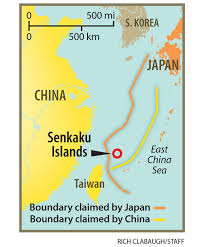
According to international law, there's a so called "special economic zone" attached to such islands, giving the right of free development of the sea resources (including those under the seabed). And that's what all this is about - not only there's a vast variety of fish there, but there are hints about oil and/or gas deposits as well. Once more, a land that has oil looks to be cursed to become the centre of a conflict...
Of course, the issue of Senkaku/Diaoyu also has a strong symbolic meaning for the two countries. It stretches way beyond the potential economic benefits. Both China and Japan have witnessed a rise of nationalism in recent times. Besides, China obviously still has a lot of open wounds related to painful memories of the past.
The truth is that both countries are losing from these tensions, and the losses by far exceed the potential benefits from developing those alleged resources. The two economies are closely intertwined and dependent on each other - they're each other's most important trade partners at this point. During the big protests in China (with the burning of Japanese flags), some Japanese-owned factories were closed, Japanese businesses were looted and Japanese cars smashed. A sort of boycott for Japanese products is also brewing. This could possibly lead to reviewing the investment strategy of the largest Japanese investors, who've contributed enormously for the Chinese industrial boom. Besides, although Japan could be viewed as a special case (because of the complicated past between the two countries), all potential investors will be anxiously watching what's happening, and if things get much worse, they could decide there's too much additional risk in investing in China.
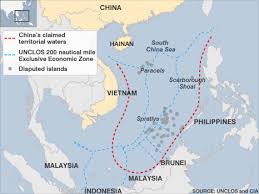
The situation is similar, if not even more complicated, in the South China Sea. China's claim dates back to the years immediately after the end of WW2, when a map was published with the so called "11 dotted lines", marking the boundaries of the Chinese zone according to China itself. Of course, no one paid much attention to the ambitions of a large country engulfed in a civil war, because it was irrelevant at the time. About a decade later, Zhou Enlai reviewed this plan to become the "Nine Dotted Line". This new strategy still lacked clear guidelines, but still it practically included the bulk of the South Chinese Sea, confining the surrounding countries back into their narrow shore aquatory.
In the topography of the South China Sea there are a few shallow places dotted with tiny islets, reefs and rocks. Historically, they've always been "no man's land", and human presence there has always been only temporary, due to the lack of fresh water. It has always been limited to the occasional visits from fishermen attracted by the rich fish resources, and pirates seeking shelter. But now, according to China these fishermen (and even the pirates) were Chinese, and they've visited the region for centuries on behalf of China. Citing the "9 lines" plan, the Chinese argue they had the first claim, so they should have primacy over those waters.
It's understandable that the remaining countries in the region deem such an explanation unacceptable. Most of them were still colonial possession back in the 40s, so they had no chance to make a claim. And, since for a long time China itself had no ability to pursue active policies on the matter, the situation only began to change in the early 90s. With its economic ascent, China is starting to assert its aspirations for a special economic zone more vigorously.
China now clearly holds the initiative in this situation, and it knows it too well. The other countries are mere witnesses, reacting to China's initiatives. And though everyone knows the best solution would be the peaceful one, China wants to demonstrate that it's not afraid to resort to force if necessary.
Several times the Chinese coast guard has shelled and dispersed Vietnamese and Philippine fishing vessels who've ventured to enter into these disputed waters. The worst incident was in April when a Philippine warship tried to arrest several Chinese fishing boats. A couple of ships from the Chinese coast guard instantly appeared on the scene. Philippine and Chinese sailors held their finger on the trigger for two days. Shit didn't hit the fan in that case, but the problem was never resolved, just postponed. As is now the case with Japan.
The problem is, the Chinese leaders have no way to make concessions from those drawn lines. That would only fuel more protests back home, and if there's one thing they fear most, it's unrest at home. Concession would also undermine one of the pillars upon which they're trying to hold the dogma of their regime: the defense of the nationalistic aspirations of their country.
So China basically expects that everyone else should just put up with it and shut up: it's our territory, period. The Chinese diplomats have often stated that there are some lines China has vowed to never cross, too: one of them, territorial sovereignty. The problem is, if these nine lines are the Chinese red line beyond which negotiation is impossible, then the chance for a peaceful solution is practically zero. No country would ever agree to accept such a territorial "arrangement" without a fight, especially when economic interests are at stake.
The bad news is that too many people in China are so convinced of the inevitability of their success that they seem to have lost touch with reality. We shouldn't rule out the possibility that entire nations are capable of getting into a state of mass delusion bordering on madness (reference: Germany in the 30s). Pragmatically seen, China is losing big time from its hard policy towards the disputed territories. With its stubbornness and aggressive behaviour, it's scaring off its neighbours and alienating its partners. And there are two possible outcomes from this in the long term: their neighbours would either unite somehow around the common cause of actively defending themselves against Chinese aggression; or they'll seek for such aid from outside (the US) if they believe it's more affordable for them politically and economically. And both options are spelling trouble for China.
And this leaves the door for "different" solutions rather dangerously ajar.
Well, the Game of Sea Rocks in East Asia is played roughly along the same principles, save for the fun part. See for yourselves:
[Error: unknown template video]
Last month a few dozen Japanese and Taiwanese sea vessels arranged a nice battle with water cannons between themselves. The Taiwanese wanted to pin their flag on a piece of rock amidst the ocean, and the Japanese did their best to stop them. The memorable event (which ended with a crushing defeat for the Taiwanese fleet) was one among many episodes of the recently inflamed row involving Taiwan, China and Japan over a few small islets (or rather, big rocks) which the three sides prefer to call islands. The hysteria has been growing ever since.
This is neither the loudest such quarrel up till now, nor the first or the last row that has threatened the fragile balance in the region. But it reveals a lot about the consequences of China's ascent, and that's why the outcome from it will be closely watched by the other countries in the region, all of whom have good reasons for concern: mostly the Philippines, Vietnam, South Korea and India.
According to China and Taiwan, these rocks are called Diaoyu Dao, and the Japanese call them Senkaku. It's just eight pieces of land really, the biggest of them a 380 m high rock sticking out of the water with less than 5 decares of territory. As of today, they're under Japan's de facto control. But both for China and Taiwan, they've been part of the Chinese territory since antiquity, and the Japanese have no right to be there.

According to international law, there's a so called "special economic zone" attached to such islands, giving the right of free development of the sea resources (including those under the seabed). And that's what all this is about - not only there's a vast variety of fish there, but there are hints about oil and/or gas deposits as well. Once more, a land that has oil looks to be cursed to become the centre of a conflict...
Of course, the issue of Senkaku/Diaoyu also has a strong symbolic meaning for the two countries. It stretches way beyond the potential economic benefits. Both China and Japan have witnessed a rise of nationalism in recent times. Besides, China obviously still has a lot of open wounds related to painful memories of the past.
The truth is that both countries are losing from these tensions, and the losses by far exceed the potential benefits from developing those alleged resources. The two economies are closely intertwined and dependent on each other - they're each other's most important trade partners at this point. During the big protests in China (with the burning of Japanese flags), some Japanese-owned factories were closed, Japanese businesses were looted and Japanese cars smashed. A sort of boycott for Japanese products is also brewing. This could possibly lead to reviewing the investment strategy of the largest Japanese investors, who've contributed enormously for the Chinese industrial boom. Besides, although Japan could be viewed as a special case (because of the complicated past between the two countries), all potential investors will be anxiously watching what's happening, and if things get much worse, they could decide there's too much additional risk in investing in China.

The situation is similar, if not even more complicated, in the South China Sea. China's claim dates back to the years immediately after the end of WW2, when a map was published with the so called "11 dotted lines", marking the boundaries of the Chinese zone according to China itself. Of course, no one paid much attention to the ambitions of a large country engulfed in a civil war, because it was irrelevant at the time. About a decade later, Zhou Enlai reviewed this plan to become the "Nine Dotted Line". This new strategy still lacked clear guidelines, but still it practically included the bulk of the South Chinese Sea, confining the surrounding countries back into their narrow shore aquatory.
In the topography of the South China Sea there are a few shallow places dotted with tiny islets, reefs and rocks. Historically, they've always been "no man's land", and human presence there has always been only temporary, due to the lack of fresh water. It has always been limited to the occasional visits from fishermen attracted by the rich fish resources, and pirates seeking shelter. But now, according to China these fishermen (and even the pirates) were Chinese, and they've visited the region for centuries on behalf of China. Citing the "9 lines" plan, the Chinese argue they had the first claim, so they should have primacy over those waters.
It's understandable that the remaining countries in the region deem such an explanation unacceptable. Most of them were still colonial possession back in the 40s, so they had no chance to make a claim. And, since for a long time China itself had no ability to pursue active policies on the matter, the situation only began to change in the early 90s. With its economic ascent, China is starting to assert its aspirations for a special economic zone more vigorously.
China now clearly holds the initiative in this situation, and it knows it too well. The other countries are mere witnesses, reacting to China's initiatives. And though everyone knows the best solution would be the peaceful one, China wants to demonstrate that it's not afraid to resort to force if necessary.
Several times the Chinese coast guard has shelled and dispersed Vietnamese and Philippine fishing vessels who've ventured to enter into these disputed waters. The worst incident was in April when a Philippine warship tried to arrest several Chinese fishing boats. A couple of ships from the Chinese coast guard instantly appeared on the scene. Philippine and Chinese sailors held their finger on the trigger for two days. Shit didn't hit the fan in that case, but the problem was never resolved, just postponed. As is now the case with Japan.
The problem is, the Chinese leaders have no way to make concessions from those drawn lines. That would only fuel more protests back home, and if there's one thing they fear most, it's unrest at home. Concession would also undermine one of the pillars upon which they're trying to hold the dogma of their regime: the defense of the nationalistic aspirations of their country.
So China basically expects that everyone else should just put up with it and shut up: it's our territory, period. The Chinese diplomats have often stated that there are some lines China has vowed to never cross, too: one of them, territorial sovereignty. The problem is, if these nine lines are the Chinese red line beyond which negotiation is impossible, then the chance for a peaceful solution is practically zero. No country would ever agree to accept such a territorial "arrangement" without a fight, especially when economic interests are at stake.
The bad news is that too many people in China are so convinced of the inevitability of their success that they seem to have lost touch with reality. We shouldn't rule out the possibility that entire nations are capable of getting into a state of mass delusion bordering on madness (reference: Germany in the 30s). Pragmatically seen, China is losing big time from its hard policy towards the disputed territories. With its stubbornness and aggressive behaviour, it's scaring off its neighbours and alienating its partners. And there are two possible outcomes from this in the long term: their neighbours would either unite somehow around the common cause of actively defending themselves against Chinese aggression; or they'll seek for such aid from outside (the US) if they believe it's more affordable for them politically and economically. And both options are spelling trouble for China.
And this leaves the door for "different" solutions rather dangerously ajar.


(no subject)
Date: 9/10/12 14:26 (UTC)Think about the new scramble Arctic, or the East Mediterranean (http://talk-politics.livejournal.com/1554188.html), or the South Atlantic. In their pursuit of their interests, the powers involved are ready to harness all muscle - legal, diplomatic and yes, even military.
(no subject)
Date: 9/10/12 15:44 (UTC)(no subject)
Date: 9/10/12 15:58 (UTC)(no subject)
Date: 9/10/12 16:00 (UTC)(no subject)
Date: 9/10/12 14:41 (UTC)As for the water territories, sadly, the outcome from this situation seems imminent: the other countries in the region will protest for a while and then they will put up with it. And China will find itself increasingly isolated in the region.
(no subject)
Date: 9/10/12 14:47 (UTC)(no subject)
Date: 9/10/12 15:52 (UTC)(no subject)
Date: 9/10/12 15:56 (UTC)(no subject)
Date: 9/10/12 16:56 (UTC)(no subject)
Date: 9/10/12 17:03 (UTC)(no subject)
Date: 9/10/12 14:46 (UTC)(no subject)
Date: 9/10/12 16:56 (UTC)(no subject)
Date: 9/10/12 17:00 (UTC)DOH! My apologies.
EEeek!!!
(no subject)
Date: 9/10/12 17:04 (UTC)(no subject)
Date: 9/10/12 17:09 (UTC)(no subject)
Date: 9/10/12 17:11 (UTC)(no subject)
Date: 9/10/12 14:46 (UTC)(no subject)
Date: 9/10/12 15:43 (UTC)(no subject)
Date: 9/10/12 20:32 (UTC)Just a brief look at the map shows that China's claim doesn't make any sense whatsoever.
But then again (http://blog.hiddenharmonies.org/wp-content/uploads/2010/08/CG-map-3.gif)...
(no subject)
Date: 10/10/12 02:36 (UTC)China should probably back off their absurd claims. Unfortunately it looks like they're going full bore ahead. This may actually result in the nightmare situation for them, the formation of a defensive alliance between almost all their maritime neighbors, an alliance that would feel beholden to see the US as their sponsor, and to support the independence of Taiwan in the international arena. I think that's a long way off (the ASEAN countries are still squabbling among themselves, and nobody seems to like the Japanese), but thanks to Chinese mismanagement it's now a distinct possibility.