UK's innovation lag
9/3/21 18:40![[personal profile]](https://www.dreamwidth.org/img/silk/identity/user.png) fridi posting in
fridi posting in ![[community profile]](https://www.dreamwidth.org/img/silk/identity/community.png) talkpolitics
talkpolitics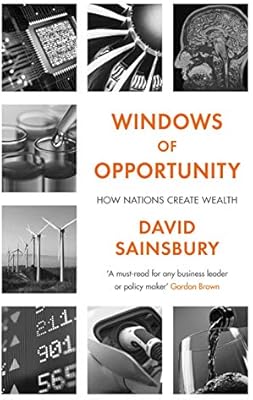
After the global financial crisis, the UK is practically in a state of stagnation. In a stagnant situation, economic policy becomes a zero-sum game. Meaning, one's situation could only improve at the expense of another's. And that's definitely a recipe for conflict. Generating a sustained economic growth is essential for getting out of such a predicament.
The plummeting productivity rate is not unique for the UK, though. Every other G7 country has consistently registered a lower GDP per hour growth between 2010 and 2019 compared to 1990-2000. But the UK downturn is the largest, from 2.6% annual rate to just 0.4%. The only G7 economy that's doing worse is Italy, but they also started from a lower point.
This isn't hard to explain. The average investment in fixed capitals in the UK was the lowest among the G7 members between 2010-2018, just over 16% of the GDP. The only G7 country with lower investment in development and innovation was again Italy. As new technology is relevant to new capital equipment and investment, such low investment rates are a factor for further low productivity.
So why has the UK's growth ground to a halt? The best analysis I think comes from David Sainsbury in his Windows of Opportunity. The author is a former entrepreneur, former Minister of Education in Tony Blair's government. His opinion is based on the positions of earlier influential thinkers such as Alexander Hamilton and Joseph Schumpeter.
Sainsbury argues that neoclassical economy doesn't have a theory of growth as it doesn't have a theory of innovation. He proposes a theory of his own: growth is driven by business innovation. This he calls a Capabilities/Market Opportunity Dynamic. He sees 4 conditions for success: looking for new products and services; technological capabilities that are specific for a certain sector; companies with the ability to use those capabilities; and institutions that are ready to support these companies.
This is when growth becomes an evolutionary process consisting of test and error, marked by degrees of uncertainty, economies from volume and scope, external network effects, temporary monopolies, and cumulative advantages. Historical experience confirms that growth is essentially a race to the top. This means that new capabilities are being tested and used, in turn generating sustained advantages in the highly productive sectors, hence higher salaries.
This approach allows Sainsbury to understand how come some countries have been economically successful while others haven't, and not least importantly, why countries that used to be successful could lag behind at some point. The answer is, they've lost too much of their new sectors with the big innovations and high productivity.
If we look at the success stories about growth for the last couple of centuries, from Germany to the US to Japan, South Korea and China, we'd realize it was never about doing more of the same stuff over and over - instead, it was about doing new things, especially ones that imply an increase in capacity for doing further new things in the future. Once an economy has lost this ability, it starts to stagnate.
Sainsbury argues that there are 4 possible strategies for innovation: 1) allow the market to decide; 2) aid the supply of relevant production factors (like science and qualified labor); 3) support key industries and technologies; 4) select particular companies, technologies and products to stimulate. He believes that governments should be doing number 2 and 3, and not 4, which better be left to bankers and risk investors. But the governments can and definitely should fund science and the development of scientific and other skills, and encourage a few broader industries and technologies.
The economic rationale for the centralized support for innovation is that knowledge is a quasi-societal treasure. And that's not just theory. In practice, state support has played a central role for the development of almost all major technologies of the 20th and 21st century. But governments also play a central role in a broader sense as well, stimulating the development of those general skills that Sainsbury talks about. That's because almost any new essential capability has a role for societal development. For instance, knowledge related to the growth of a certain type of business is part of the qualifications of those people who could potentially leave for a competitor business, and infuse that knowledge there. Again, developing something fundamentally new is often both expensive and risky, and private businesses don't tend to want to risk a lot of their resources. Hence, the need for a more society-orientated, less profit-orientated benefactor, which is the state.
So, back to the innovation crisis in the UK. It inevitably brings a growth crisis. The British government should think deeply about these issues. For example, why is British business investing so little in innovation? Why is the UK in such a weak position in terms of high-tech production? Which industries and technologies offer the best potential for future growth? How could higher education research and qualification be tied to the needs of the business world? Britain is seriously lagging behind. It has to answer these questions, and quickly. And its story should serve as a warning to others.


(no subject)
Date: 10/3/21 09:05 (UTC)Brexit has fucked a lot of that. The past five years needed huge alternative investment. The local workforce needed upskilling if limits were put on immigration. Upskilling takes a generation.
The list of unfortunate coincidences in the concatenated crisis-fest we have faced of late... has left us in a precarious position.
When the stone at the apex of the arch of the bridge falls, the bridge falls.
In ten years' time we will have gone from the fifth-largest economy to something akin to Italy's position in the world, or lesser. Sic transit and all that, what. Rome didn't quite fall in a day.