![[identity profile]](https://www.dreamwidth.org/img/silk/identity/openid.png) airiefairie.livejournal.com posting in
airiefairie.livejournal.com posting in ![[community profile]](https://www.dreamwidth.org/img/silk/identity/community.png) talkpolitics
talkpolitics"Apartheid is dead, long live democracy!", is what we hear very often here at the bottom of the world. But meanwhile, also "Apartheid is not dead, it has only transformed!" And in many ways, that is true too. But there is even a place, although a tiny one, where apartheid is really alive and well, and is authorised at an institutional level. It is a place where a small local community of white Afrikaners has voluntarily segregated and isolated itself from the outer world, and where they live according to their understanding of a society. And they do not let anyone else in, especially if he or she is black.
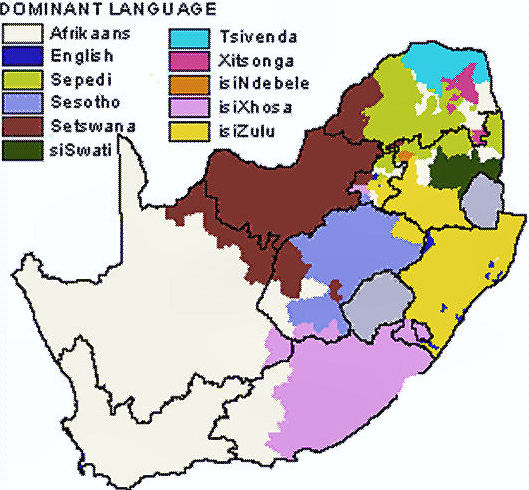
That place is Orania, a small village at the edge of the Northern Cape territory, on the banks of the Orange river. Or Oranjerivier, as it is called in Afrikaans. Because Afrikaans is exclusively the language that is spoken there.
I have visited Orania just once, 3 years ago during a huge 3-week long tour across South Africa and a few neighbouring countries. It was a great experience... a dozen vehicles and families forming a big convoy of crazy tourists. And Orania was one of the first stops along the way.


People come to Orania mostly to hear the stories. And the locals never disappoint. As laid back and environmentally friendly as they are, one would often find themselves scratching their head when the story starts going into social issues.
There was a lot of talking about national unity here, especially around he FIFA World Cup in 2010. The "Rainbow Nation" was a concept that was being actively promoted, the "United in Diversity" idea, the "South Africa - It's Possible" slogan, the "Let's think positively" and all that... Apart from soccer and rugby, most conversations at the braai would tend to revolve around peace and togetherness, and the long and painful process of overcoming the old wounds of the past, and the hope that a new harmonious coexistence between the various communities of this country would foster new solutions to old problems. At this background, a place like Orania may look like a total anachronism, out of place, out of touch and out of the epoch. Because people there have a very different philosophy. One that might easily be called racist, and there would be some reason in that. But still, one that warrants some understanding. These and other thoughts were in my head while the convoy of SUVs and trucks was bypassing the "Welkom In Orania - Die Afrikanertuiste" sign at the entrance of the village. Yes, the Home of the Afrikaners.
Even at a first glimpse, most expectations were proven right. Orania is nothing special as a place. Just a small village in the dusty, sun-baked countryside in the middle of the arid Karoo plains. The Afrikaners have a great affinity to agriculture in general and they know how to look after their land, so the neat gardens and well maintained streets were no surprise. But the surprises were soon to start popping up from beneath the facade, once you opened your mouth and ears. In a country where 80% of the people are black, and even in a province where 90% of the people are of the so-called "coloured" type, you suddenly come across a place where not only 100% are white, but they all speak Afrikaans and refuse to make contact in any other language, even if they know some of it. Now, I still wasn't very good at Afrikaans back then, I had only spent a couple of years in South Africa. So the language barrier was a major obstacle. But still, with the help of some interpreters from the group, I could get the main point.
And the bottom line is very clear. Orania is populated by Afrikaners who adhere to a philosophy that is more than 20 years old. Now, two decades after the fall of apartheid, Orania may be looking like any ordinary village in the Northern Cape, with a grocery store, a gas station, a small book shop where you can buy t-shirts with the town's logo... The lady who was working in the book shop looked nice and she smiled at me and asked me if I could sign the guest book. I tried to speak with her in English, she obviously understood me, but still she never uttered a word in English. I said Oh Well, and I signed the book. In English. That was maybe my only minor troll moment in Orania. =)
South Africa has 11 official languages, and this is valid everywhere around the country, regardless of the local dominant language. Most people are at least bilingual, if not trilingual or more. But in Orania there is only one language you could use, and that is Afrikaans. The guy from the Municipality that we met, an amateur physicist or something like that, made a short guided tour for us, in Afrikaans of course. He insisted that we should watch a presentation video about Orania, and we did not resist too much. The first scene on the screen was a group of happy kids who were riding bikes. We were explained that "This is a place where kids could have a normal childhood, and the local people can walk around freely, without looking over their shoulder with fear". Of course, no black kids were to be seen anywhere in the whole 'free' scheme. This little piece of propaganda was apparently meant to make a clear distinction between blacks and whites. The peaceful, law-abiding white kids who are playing around with their bikes and help their dad in the garden, vs 'those other' kids who live in the townships and who are taught to pickpocket and beg at the subways.
While we were driven around town in a couple of Jeeps, we were shown the newly built houses with the solar panels on the roofs and the nicely trimmed hedges. Notably, no high walls and fences to be seen around. And during the tour we were being explained the procedure for buying a house in Orania. First you must file an application where you promise that you would follow the Afrikaner culure. Then the application is reviewed by the local authorities.
"So, no blacks then?", my hubby finally ventured to spit out the question that was at the tip of everyone's tongue... The lightnings in the eyes of the municipality guy flashed just for a second, then he skillfully extinguished them, and sharply emphasisesd, "WE decide who lives here". "But how's that not racial discrimination?", my hubby trolled on.
This seemed to trigger a tirade that revealed more than it probably was supposed to. In a nutshell, "Many people from around the country wouldn't want to come here, especially if they are not white. But it is not our fault".
The story went on as expected. Once upon a time the Afrikaners were in control of the entire country. Yes, often using brute force, but that was justified because they were a minority and they had to protect themselves and preserve their culture and "their way of life" in a place where the blacks are the vast majority. So in 1940 the apartheid system was introduced as an official form of segregation, and the Afrikaner dictatorship stayed for 50 years, bringing prosperity but not peace. This lasted until 1990 when Nelson Mandela was released from prison under pressure from within (the struggle lead by ANC) and from outside (the boycott from the international community). The collapse of the regime had been a matter of time.
Then the missionary Carel Boshoff who by he way was an adopted son of Hendrik Verwoerd, the architect of apartheid, decided to try a different approach. He was joined by 40 Afrikaner families and they bought a plot of deserted government land, and turned it into the village that is now Orania. From the onset the idea of these families was to live separately from everyone else, especially the blacks. They did not want to meddle into others' matters, and they did not want anyone to meddle into theirs. So there is practically a regime blocking blacks from settling or getting a job in Orania. The nice trick is that when the land was bought, Boshoff registered the whole village as a private enterprise, an investment fund, with its internal rules. Anyone who wanted to settle there would have to make a donation to the fund. He also relied on Article 235 of the Constitution from 1996 which grants all ethnic groups the right to create settlements based on cultural self-identification. And the philosophy behind Orania is that the Rainbow Nation project was doomed to failure because it was stupid and unrealistic, and impossible to achieve because it can only lead to tension and conflict. So they decided to live in their own way, separate from the rest.
That is their idea, after Boshoff's initial project for the creation of an Afrikaner "Homeland" proved unachievable. Now Orania is like an enclave of the old times. Ironically, what the white Afrikaners had planned for the blacks with the bantustan system, they have now practically brought upon themselves in Orania. It is really like a bantustan. It has its own flag and even its own currency, the Ora. Although it is not officially recognised anywhere as a currency, you are encouraged to exchange your Rands for the "local coupons", the Ora. The population is around one thousand and does not show tendencies to grow, either the natural way or through newcomers flocking in. Apparently the vast majority of the other whites in the country do not seem to be thrilled with the idea of self-segregation.
There was this other guy, who claimed to be a descendant of Boshoff (there are many in Orania, as one might expect). He had those big glasses and old-fashioned short jacket from the early 20th century, and obviously he was trying too hard to look like the traditional intellectual. Blond hair and blue eyes, of course. He might have passed for a true-Dutchman, if he wasn't sitting there at the cafe, explaining to us the advanages of the "hard-working Afrikaner". Apparently he was fascinated by his own stories about the philosophy of the place and his memories about apartheid. "See, the people of Orania do not have anything personal against the blacks", he mused. "We just do not share the same culture, therefore we cannot live together". It sounded so simple!
He went on to share his disdain for the government labour programs aiming to empower blacks in society, especially the affirmative action quotas. For example, a very skilled white engineer with many years of experience could suddenly become a mere assistant to a black engineer who has just come out of the technical university. "This simply does not suit us, and we disagree", he added.
Of course he did not miss to mention the high crime rates in the other regions of the country. "People in Johannesburg and other cities live behind high walls, in fear for themselves, and they constantly look over their shoulder for criminals who would mug them and rape them". By "people" he obviously meant white people. "There is no logical reason for us to try to live together and in mutual understanding. That is simply unrealistic. Instead, we have built a community here only for ourselves and we are happy with that", he concluded.
I sat silent in the car as we were leaving Orania in the late afternoon on our way back into the 21st century... I was thinking about the coming FIFA World Cup and all the sloganeering about togetherness and harmony, and the "Rainbow Nation"... It was an event that was supposed to demonstrate the unity of the South African nation. And I thought to myself, maybe this small community wouldn't be able to join such a cause. Not because it was unable to contribute or something like that. No, in fact great causes are supported and carried out by many small communities the size of Orania. It's just that Orania was a lost cause in this respect. It is not that it wouldn't be able to contribute for maybe building a better society. The thing is, it does not want to.
But you know what? That is fine by me. There are enough people outside the enclave who are still willing to roll up the sleeves and do some real work, instead of hiding behind their nicely trimmed hedges. People who have knocked the fences in their minds and who do not think the "enclaved" sort of way. Fortunately, they are still many, and probably increasing as the time passes and the old wounds are slowly healing. Very slowly.


That place is Orania, a small village at the edge of the Northern Cape territory, on the banks of the Orange river. Or Oranjerivier, as it is called in Afrikaans. Because Afrikaans is exclusively the language that is spoken there.
I have visited Orania just once, 3 years ago during a huge 3-week long tour across South Africa and a few neighbouring countries. It was a great experience... a dozen vehicles and families forming a big convoy of crazy tourists. And Orania was one of the first stops along the way.
People come to Orania mostly to hear the stories. And the locals never disappoint. As laid back and environmentally friendly as they are, one would often find themselves scratching their head when the story starts going into social issues.
There was a lot of talking about national unity here, especially around he FIFA World Cup in 2010. The "Rainbow Nation" was a concept that was being actively promoted, the "United in Diversity" idea, the "South Africa - It's Possible" slogan, the "Let's think positively" and all that... Apart from soccer and rugby, most conversations at the braai would tend to revolve around peace and togetherness, and the long and painful process of overcoming the old wounds of the past, and the hope that a new harmonious coexistence between the various communities of this country would foster new solutions to old problems. At this background, a place like Orania may look like a total anachronism, out of place, out of touch and out of the epoch. Because people there have a very different philosophy. One that might easily be called racist, and there would be some reason in that. But still, one that warrants some understanding. These and other thoughts were in my head while the convoy of SUVs and trucks was bypassing the "Welkom In Orania - Die Afrikanertuiste" sign at the entrance of the village. Yes, the Home of the Afrikaners.
Even at a first glimpse, most expectations were proven right. Orania is nothing special as a place. Just a small village in the dusty, sun-baked countryside in the middle of the arid Karoo plains. The Afrikaners have a great affinity to agriculture in general and they know how to look after their land, so the neat gardens and well maintained streets were no surprise. But the surprises were soon to start popping up from beneath the facade, once you opened your mouth and ears. In a country where 80% of the people are black, and even in a province where 90% of the people are of the so-called "coloured" type, you suddenly come across a place where not only 100% are white, but they all speak Afrikaans and refuse to make contact in any other language, even if they know some of it. Now, I still wasn't very good at Afrikaans back then, I had only spent a couple of years in South Africa. So the language barrier was a major obstacle. But still, with the help of some interpreters from the group, I could get the main point.
And the bottom line is very clear. Orania is populated by Afrikaners who adhere to a philosophy that is more than 20 years old. Now, two decades after the fall of apartheid, Orania may be looking like any ordinary village in the Northern Cape, with a grocery store, a gas station, a small book shop where you can buy t-shirts with the town's logo... The lady who was working in the book shop looked nice and she smiled at me and asked me if I could sign the guest book. I tried to speak with her in English, she obviously understood me, but still she never uttered a word in English. I said Oh Well, and I signed the book. In English. That was maybe my only minor troll moment in Orania. =)
South Africa has 11 official languages, and this is valid everywhere around the country, regardless of the local dominant language. Most people are at least bilingual, if not trilingual or more. But in Orania there is only one language you could use, and that is Afrikaans. The guy from the Municipality that we met, an amateur physicist or something like that, made a short guided tour for us, in Afrikaans of course. He insisted that we should watch a presentation video about Orania, and we did not resist too much. The first scene on the screen was a group of happy kids who were riding bikes. We were explained that "This is a place where kids could have a normal childhood, and the local people can walk around freely, without looking over their shoulder with fear". Of course, no black kids were to be seen anywhere in the whole 'free' scheme. This little piece of propaganda was apparently meant to make a clear distinction between blacks and whites. The peaceful, law-abiding white kids who are playing around with their bikes and help their dad in the garden, vs 'those other' kids who live in the townships and who are taught to pickpocket and beg at the subways.
While we were driven around town in a couple of Jeeps, we were shown the newly built houses with the solar panels on the roofs and the nicely trimmed hedges. Notably, no high walls and fences to be seen around. And during the tour we were being explained the procedure for buying a house in Orania. First you must file an application where you promise that you would follow the Afrikaner culure. Then the application is reviewed by the local authorities.
"So, no blacks then?", my hubby finally ventured to spit out the question that was at the tip of everyone's tongue... The lightnings in the eyes of the municipality guy flashed just for a second, then he skillfully extinguished them, and sharply emphasisesd, "WE decide who lives here". "But how's that not racial discrimination?", my hubby trolled on.
This seemed to trigger a tirade that revealed more than it probably was supposed to. In a nutshell, "Many people from around the country wouldn't want to come here, especially if they are not white. But it is not our fault".
The story went on as expected. Once upon a time the Afrikaners were in control of the entire country. Yes, often using brute force, but that was justified because they were a minority and they had to protect themselves and preserve their culture and "their way of life" in a place where the blacks are the vast majority. So in 1940 the apartheid system was introduced as an official form of segregation, and the Afrikaner dictatorship stayed for 50 years, bringing prosperity but not peace. This lasted until 1990 when Nelson Mandela was released from prison under pressure from within (the struggle lead by ANC) and from outside (the boycott from the international community). The collapse of the regime had been a matter of time.
Then the missionary Carel Boshoff who by he way was an adopted son of Hendrik Verwoerd, the architect of apartheid, decided to try a different approach. He was joined by 40 Afrikaner families and they bought a plot of deserted government land, and turned it into the village that is now Orania. From the onset the idea of these families was to live separately from everyone else, especially the blacks. They did not want to meddle into others' matters, and they did not want anyone to meddle into theirs. So there is practically a regime blocking blacks from settling or getting a job in Orania. The nice trick is that when the land was bought, Boshoff registered the whole village as a private enterprise, an investment fund, with its internal rules. Anyone who wanted to settle there would have to make a donation to the fund. He also relied on Article 235 of the Constitution from 1996 which grants all ethnic groups the right to create settlements based on cultural self-identification. And the philosophy behind Orania is that the Rainbow Nation project was doomed to failure because it was stupid and unrealistic, and impossible to achieve because it can only lead to tension and conflict. So they decided to live in their own way, separate from the rest.
That is their idea, after Boshoff's initial project for the creation of an Afrikaner "Homeland" proved unachievable. Now Orania is like an enclave of the old times. Ironically, what the white Afrikaners had planned for the blacks with the bantustan system, they have now practically brought upon themselves in Orania. It is really like a bantustan. It has its own flag and even its own currency, the Ora. Although it is not officially recognised anywhere as a currency, you are encouraged to exchange your Rands for the "local coupons", the Ora. The population is around one thousand and does not show tendencies to grow, either the natural way or through newcomers flocking in. Apparently the vast majority of the other whites in the country do not seem to be thrilled with the idea of self-segregation.
There was this other guy, who claimed to be a descendant of Boshoff (there are many in Orania, as one might expect). He had those big glasses and old-fashioned short jacket from the early 20th century, and obviously he was trying too hard to look like the traditional intellectual. Blond hair and blue eyes, of course. He might have passed for a true-Dutchman, if he wasn't sitting there at the cafe, explaining to us the advanages of the "hard-working Afrikaner". Apparently he was fascinated by his own stories about the philosophy of the place and his memories about apartheid. "See, the people of Orania do not have anything personal against the blacks", he mused. "We just do not share the same culture, therefore we cannot live together". It sounded so simple!
He went on to share his disdain for the government labour programs aiming to empower blacks in society, especially the affirmative action quotas. For example, a very skilled white engineer with many years of experience could suddenly become a mere assistant to a black engineer who has just come out of the technical university. "This simply does not suit us, and we disagree", he added.
Of course he did not miss to mention the high crime rates in the other regions of the country. "People in Johannesburg and other cities live behind high walls, in fear for themselves, and they constantly look over their shoulder for criminals who would mug them and rape them". By "people" he obviously meant white people. "There is no logical reason for us to try to live together and in mutual understanding. That is simply unrealistic. Instead, we have built a community here only for ourselves and we are happy with that", he concluded.
I sat silent in the car as we were leaving Orania in the late afternoon on our way back into the 21st century... I was thinking about the coming FIFA World Cup and all the sloganeering about togetherness and harmony, and the "Rainbow Nation"... It was an event that was supposed to demonstrate the unity of the South African nation. And I thought to myself, maybe this small community wouldn't be able to join such a cause. Not because it was unable to contribute or something like that. No, in fact great causes are supported and carried out by many small communities the size of Orania. It's just that Orania was a lost cause in this respect. It is not that it wouldn't be able to contribute for maybe building a better society. The thing is, it does not want to.
But you know what? That is fine by me. There are enough people outside the enclave who are still willing to roll up the sleeves and do some real work, instead of hiding behind their nicely trimmed hedges. People who have knocked the fences in their minds and who do not think the "enclaved" sort of way. Fortunately, they are still many, and probably increasing as the time passes and the old wounds are slowly healing. Very slowly.
Left: "I speak and think in Afrikaans". I remember someone jokingly wondering about the wattage of the light bulb depicted.
Right: But it is not so innocent for everybody. The territory in red is of a future projected country to be carved out of SA.
Right: But it is not so innocent for everybody. The territory in red is of a future projected country to be carved out of SA.


(no subject)
Date: 24/3/12 17:34 (UTC)http://www.youtube.com/watch?v=L2LLM38bHDY
(no subject)
Date: 25/3/12 10:25 (UTC)http://www.sfgate.com/cgi-bin/article.cgi?f=/c/a/2005/03/13/INGPOBMRMU1.DTL
(no subject)
Date: 24/3/12 17:43 (UTC)(no subject)
Date: 24/3/12 20:08 (UTC)(no subject)
Date: 24/3/12 20:34 (UTC)(no subject)
Date: 24/3/12 17:57 (UTC)(no subject)
Date: 24/3/12 17:59 (UTC)(no subject)
Date: 24/3/12 20:35 (UTC)(no subject)
From:(no subject)
Date: 24/3/12 22:15 (UTC)(no subject)
Date: 24/3/12 18:00 (UTC)However, this thing opens up all kinds of difficult questions in my head so maybe someone could help me.
We all believe in the right to voluntary free association right? And logically that would include the freedom to not associate. Likewise I think most here believe that people have the right to enjoy their ethnic culture and preserve it, etc. And I personally believe do believe people should be left to live their lives as they want without an involuntary organization being imposed on them like the state.
However, the question becomes for me--with that in mind--how do you stop some recalcitrant racists, for example, from banding together and doing something like this, or, what do you do if they do? On the one hand, I'm inclined to think, that this group has stolen from the larger multicolored community by occupying that land and using the weight of the state to stop those of another ethnicity from being there, i.e. their claim is illegitimate. But is violent action then justified on the part of the outside non-racist, multicultural forces to end that segregation? Or should the emphasis be on personal freedom, and thus the people left alone to segregate themselves if they want, despite how offensive it is.
Following my fragmented tracks? I'm just not sure how it should go.
(no subject)
Date: 24/3/12 18:10 (UTC)They did not steal the land, they bought it. And apart from the loophole in the Constitution which they have exploited to legally sustain this segregation, they are not breaking any laws; are paying their taxes, etc. Yes, blacks and coloureds cannot settle in Orania and cannot be hired there, but they are not banned from visiting the place. In fact some of my friends in that traveling group were indeed not white, and I did not notice any bad attitude on the locals' part towards them. While their worldview is indeed offensive to the more cosmopolitan-inclined types like myself from an ethical standpoint, I would not judge them for that, as long as they do not infringe upon other people's rights outside of their community.
(no subject)
Date: 24/3/12 18:20 (UTC)Also, because of my anti-enclosure views, I actually do consider "buying it", with a kind of stealing, since I feel that it uses the threat of state violence to take land which was once commonly understood to be able to be enjoyed and used by all. But that could just be me.
But I can see the wisdom of your answer, although just the idea of it still makes me mad.
(no subject)
From:(no subject)
Date: 24/3/12 19:31 (UTC)(no subject)
Date: 24/3/12 20:02 (UTC)But yes exactly. Involuntary organization is a major problem and inevitably leads to conflict. And what often exacerbates that conflict is privatized land, whereby those who would secede and who, having lived there all their lives, have just as much right to it as anyone else, cannot find space for them to actually be independent, as in "Kurdistan", because the dominant class claims all the land as it and its vassals' own.
But at the same time comes the other question, which is the one I had in mind specifically, what right does anyone have to restrict some other group from being part of something they *do* want to be part of? I'm not sure how to answer that question, considering it comes to bear just as much on the right of the other side to not be part of it etc. which just leads back again in a recursive loop.
Any ideas? Because this is something that I struggle with when I imagine the decentralization of power and establishment of a free society.
(no subject)
From:(no subject)
From:(no subject)
From:(no subject)
From:(no subject)
From:(no subject)
From:(no subject)
From:(no subject)
From:(no subject)
From:(no subject)
From:(no subject)
From:(no subject)
From:(no subject)
From:(no subject)
From:(no subject)
From:(no subject)
From:(no subject)
Date: 25/3/12 03:10 (UTC)(no subject)
From:(no subject)
From:(no subject)
Date: 25/3/12 10:26 (UTC)Because some communities breach universal rights.
(no subject)
From:(no subject)
From:(no subject)
From:(no subject)
Date: 24/3/12 20:20 (UTC)But it's an ethnic enclave. The Afrikaners are a minority who wish to preserve a way of life that isn't modern. Though the reasons stem from racism, the Afrikaners really just want a place where they can practice their culture and speak their language in peace. Are you saying that it should be allowable to keep a minority that uses legal means to protect their heritage from doing so? The Afrikaners purchased the land and used legal means to protect who has use of that purchased land. The only real difference between this and places like Chinatown, Germantown, Little India, or Koreatown is that there is a legal loophole barring non-Afrikaners from residing there.
What I'm trying to ask is whether you would have the same opinion were this a different minority with a different history creating an ethnic conclave and barring other ethnicities from living there.
(no subject)
Date: 24/3/12 21:46 (UTC)So yes the Afrikaners are a minority and have every right to preserve their culture/way of life, regardless of whether I say they do or not. That's just their prerogative. However I question the "in peace" part, a la how much of a threat is the presence traditional South African ethnicities to that culture really, provided no one is trying to conquer or impose that upon them, And that's where I think the racism makes itself obvious--it seems to be an irrational fear and prejudice, although as you know there are certainly times in history where one ethnic culture is very deliberately trying to destroy another or assimilate it.
So as I said above for me the issue is torn between the freedom of individuals to not be forced to be part of something they don't want to and the freedom of individuals to not be restricted from being part of something that they do want to. I'm not sure where the middle ground lies, i.e. voluntary segregation is obviously fine, but yet on the other hand when that becomes enforced segregation for those on those outside, who is really being oppressed?
(no subject)
From:(no subject)
From:(no subject)
From:(no subject)
From:(no subject)
Date: 24/3/12 20:17 (UTC)I seriously can't see how folks can have it both ways: we don't want you to live apart from us but we don't want you living next door either. What that basically says instead is, we don't like the way you think, so let's call the thought police.
(I'm not saying the OP or any other commenter is doing this. Just speculating.)
(no subject)
Date: 24/3/12 20:26 (UTC)(no subject)
From:(no subject)
Date: 24/3/12 21:47 (UTC)This, from an actual Afrikaner of a Boer descent.
(no subject)
Date: 24/3/12 21:47 (UTC)(no subject)
Date: 24/3/12 23:35 (UTC)(no subject)
Date: 24/3/12 23:39 (UTC)(no subject)
From:(no subject)
Date: 25/3/12 03:08 (UTC)